A sticking sliding glass door is one of those problems that feels “big” until you break it down. In most homes, the door is dragging for a few common reasons: the track is packed with grit, the rollers are out of adjustment (or worn out), or the frame is slightly out of square. The good news is you can usually fix it in under an hour with basic tools and the right lubricant.
I grew up holding a flashlight while my dad wrestled with doors that “used to slide fine.” Nine times out of ten, it was just a filthy track and rollers that needed a little love. Let’s get yours gliding again.
Before you start
Safety first
- Watch your fingers: Doors are heavy, and the edges bite.
- Eye protection: You will kick up grit and metal flakes.
- Mind the glass: Tempered glass is tough until it isn’t. Do not pry against the glass, and be especially careful around the edges.
- Do not over-lift the panel: If you crank the rollers too high, the door can pop out of the track. Adjust in small increments and test often.
Tools and supplies
- Vacuum with crevice tool
- Stiff nylon brush or old toothbrush
- Microfiber rags or paper towels
- Mild dish soap and warm water
- Non-chlorinated degreaser (optional for heavy grime)
- Screwdriver set (Phillips and flathead)
- Allen keys (some doors use these for roller adjustment)
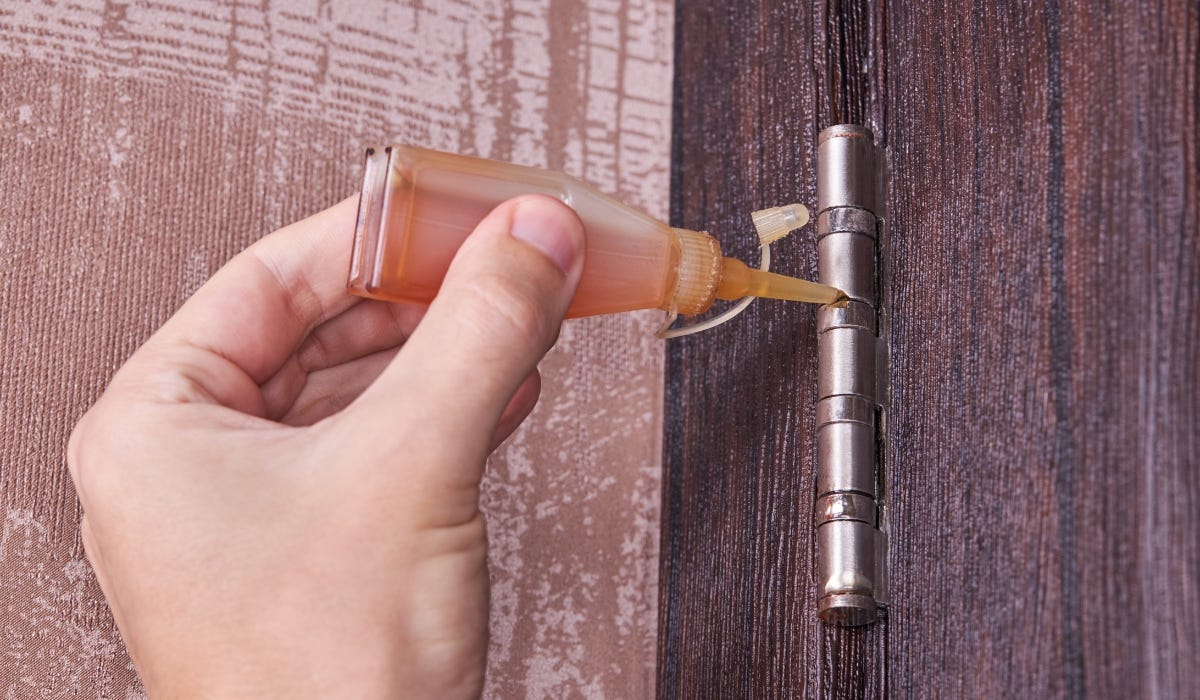
- Silicone spray or PTFE (Teflon) dry lube
- Small can of compressed air (optional)
- Wood shims (optional)
- Replacement rollers (only if yours are worn)
About WD-40: It is fine as a cleaner or a temporary “free it up” step, but it is not a great long-term track lubricant. If you use it to break down grime, wipe it off and follow with silicone or a PTFE dry lubricant.
Step 1: Diagnose the sticking
Open the door a few feet and pay attention to what you feel.
- Grinding or crunching: Dirt, sand, pet hair, or metal shavings in the track (and sometimes the top track, too).
- Heavy drag the whole way: Rollers likely too low (door riding the track) or rollers worn flat.
- Sticks at one spot: Track dent, screw head poking up, hardened gunk, or a bowed section.
- Door rubs the frame: Rollers out of adjustment or door/frame slightly out of square.
- Wobbly door or odd tilt: Missing or damaged track guide, anti-lift block, or loose hardware.
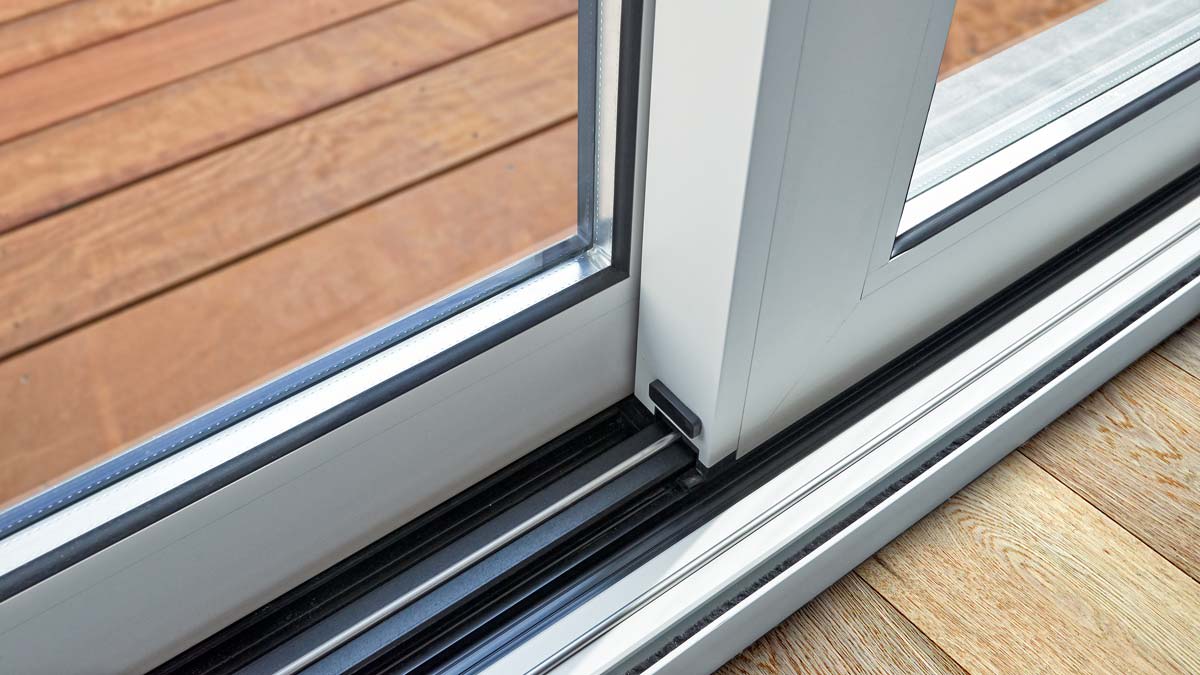
Step 2: Clean the bottom track
Lubricant on a dirty track just makes gritty paste. Cleaning is the real fix.
2A. Vacuum and dry scrub
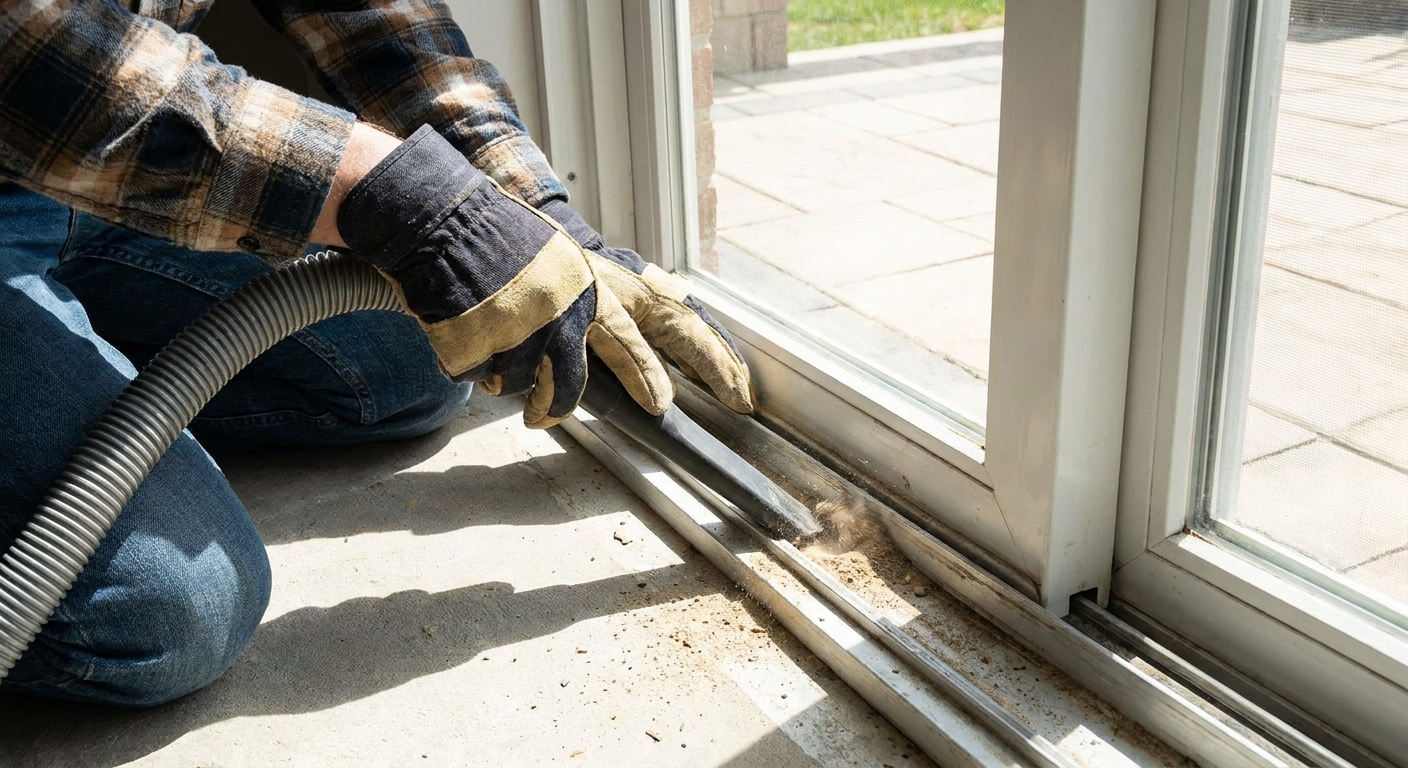
- Close the door and clean the exposed section of the bottom track. Vacuum the whole channel with a crevice tool.
- Use a stiff nylon brush to break up packed debris in the corners.
- Vacuum again. Repeat until you stop pulling out grit.
- Open the door and repeat on the section that was covered.
2B. Wet clean and wipe dry
- Mix a few drops of dish soap into warm water.
- Dip a rag, wring it out, and scrub the track, especially the inner corners where the rollers run.
- For stubborn black grime, use a small amount of non-chlorinated degreaser, then wipe clean.
- Dry it thoroughly. A dry track keeps dirt from sticking and helps dry lubes work properly.
Step 3: Clean the top track and drains
The bottom track gets all the attention, but the top track can hide grit that makes the door feel rough or misaligned.
Top track
- Vacuum the top track with a crevice tool.
- Brush out corners where dirt packs in, then vacuum again.
- Wipe with a lightly damp rag, then dry.
Weep and drain holes
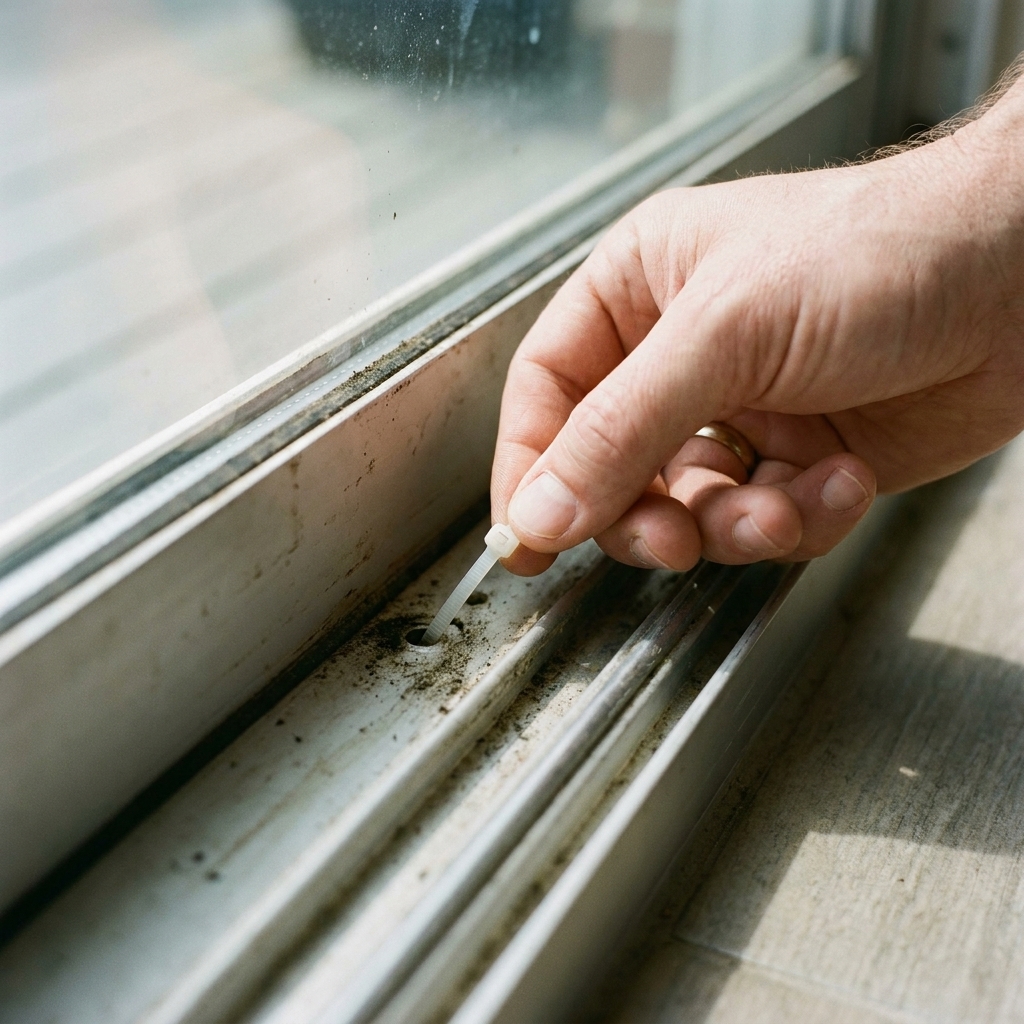
If your door track has small drain holes (often called weep holes), make sure they are clear so water does not pool and carry more dirt into the track.
- Look for small openings along the lower track or sill area.
- Clear them gently with a zip tie, pipe cleaner, or compressed air.
- Do not enlarge the holes or poke aggressively into hidden channels.
Step 4: Inspect for damage
Run your finger along the raised rail where the rollers ride. Look for:
- Dents or flat spots from rocks or impacts
- Raised screw heads or loose fasteners
- Corrosion that feels rough like sandpaper
- Burrs that feel sharp and catch your fingertip
Quick fixes:
- If a screw is sticking up, tighten it or replace it with a matching flat-head screw.
- If there is sticky residue, keep cleaning until the rail feels smooth.
- If there is a tiny burr on the rail, you can lightly dress it with fine emery cloth, then wipe clean. Go slow. The goal is to knock down the sharp edge, not reshape the rail.
- If the rail is badly dented, the best repair is usually a track cap repair kit or track replacement. You can still improve performance with new rollers, but the dent will always be a speed bump.
Step 5: Adjust the rollers
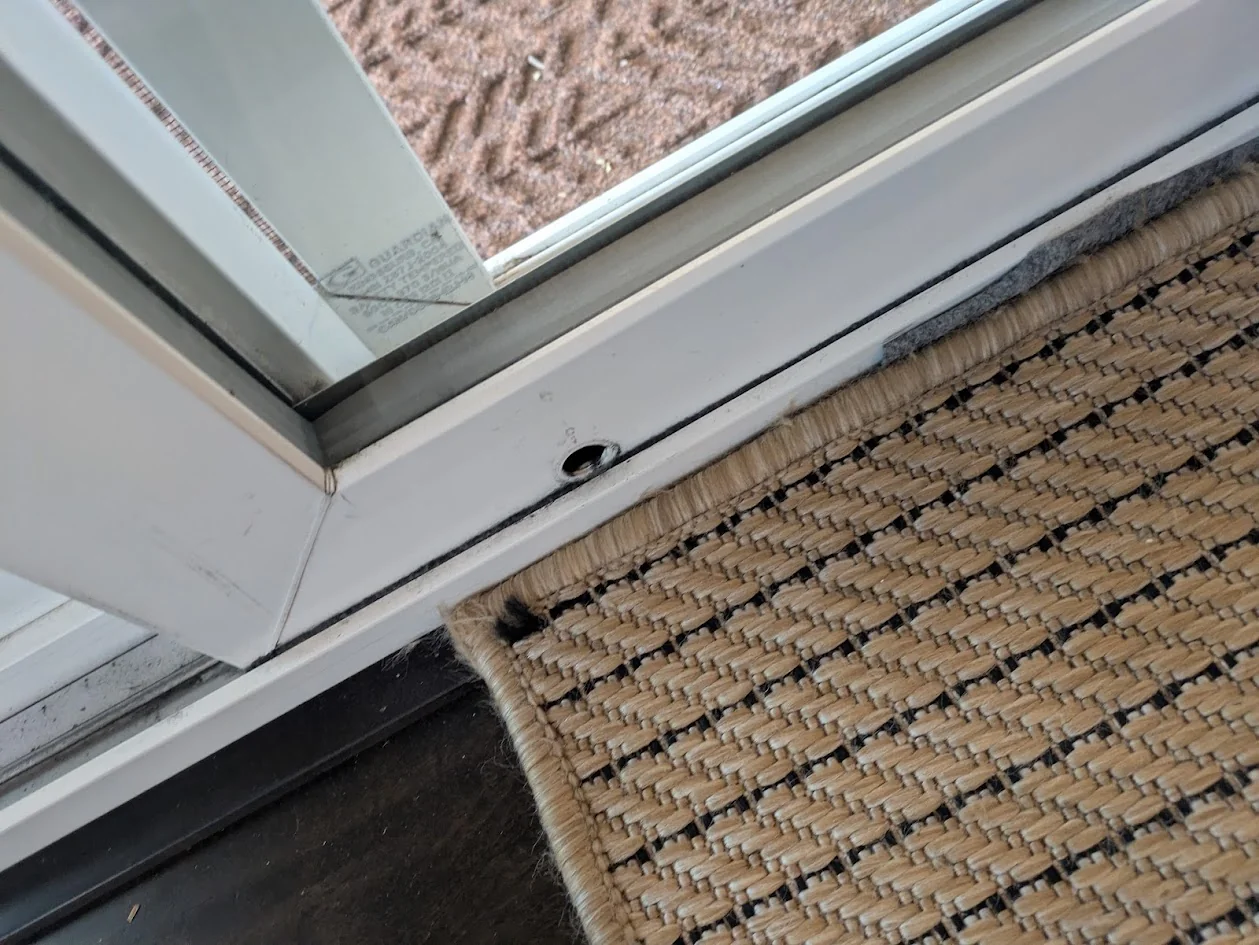
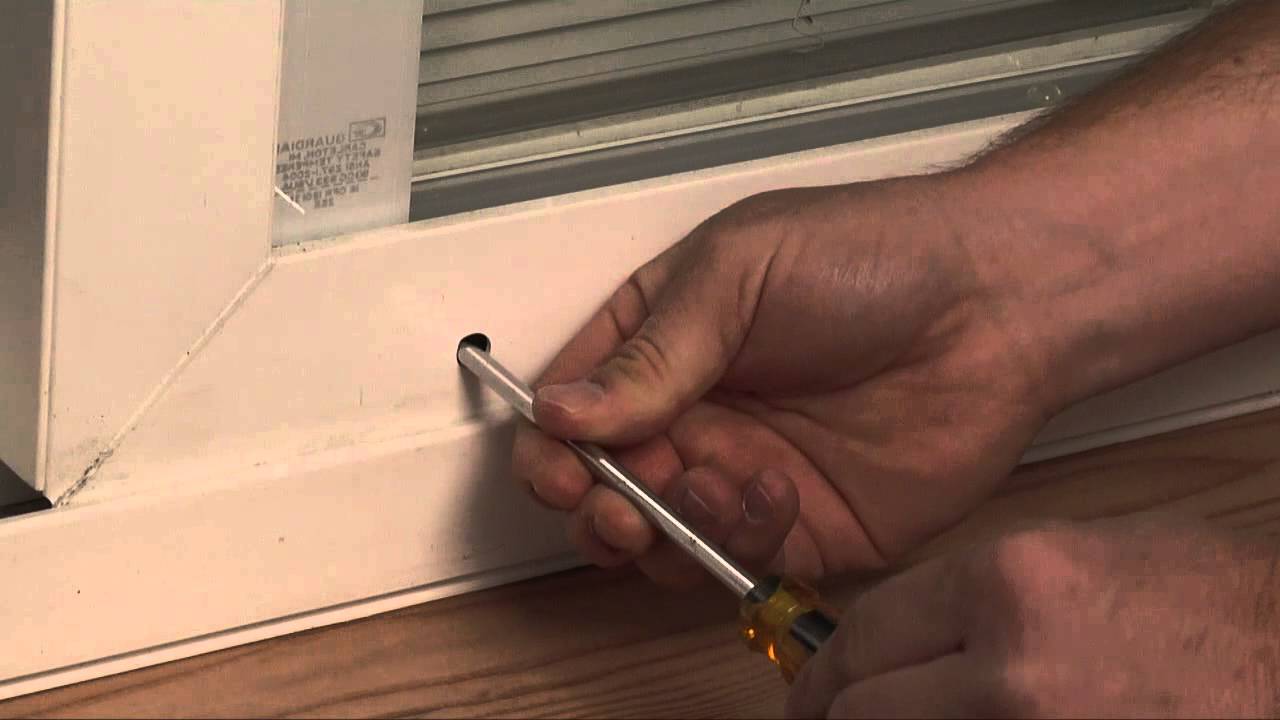
Most sliding doors have roller adjustment screws at the bottom corners of the sliding panel. They are usually accessed through small holes on the interior face near the bottom edge.
Find the adjustment screws
- Look near each bottom corner on the sliding panel edge for a small plastic plug or hole.
- Use a Phillips screwdriver or an Allen key, depending on the door.
Adjustment process
- Start with the door about halfway open. This gives you room to work and keeps the panel from binding hard against one side.
- Mark your starting point. A Sharpie dot on the screw head helps, and counting quarter-turns lets you return to baseline if needed.
- Turn both sides a quarter-turn at a time. Your goal is to raise the door slightly so the rollers carry the weight, not the bottom frame dragging.
- Test slide after each set of quarter-turns.
- Keep the reveal even. Check the vertical gap between the door and the side jamb. If it is tight at the top but wide at the bottom (or vice versa), adjust one side more than the other until it is even.
Which way do I turn? There is no universal rule. If the door gets harder to move, starts rubbing, or feels less stable, reverse direction. The “right” direction is the one that lifts the panel and improves the glide without making it feel like it wants to hop the track.
Pro tip from my own mistakes
If you crank one side way up and leave the other low, the door will still move, but it will feel “twisty” and may start climbing the rail. Slow and even wins here.
Step 6: Lubricate the right way
Once everything is clean and adjusted, lubrication is the finishing touch.
Choose the right lubricant
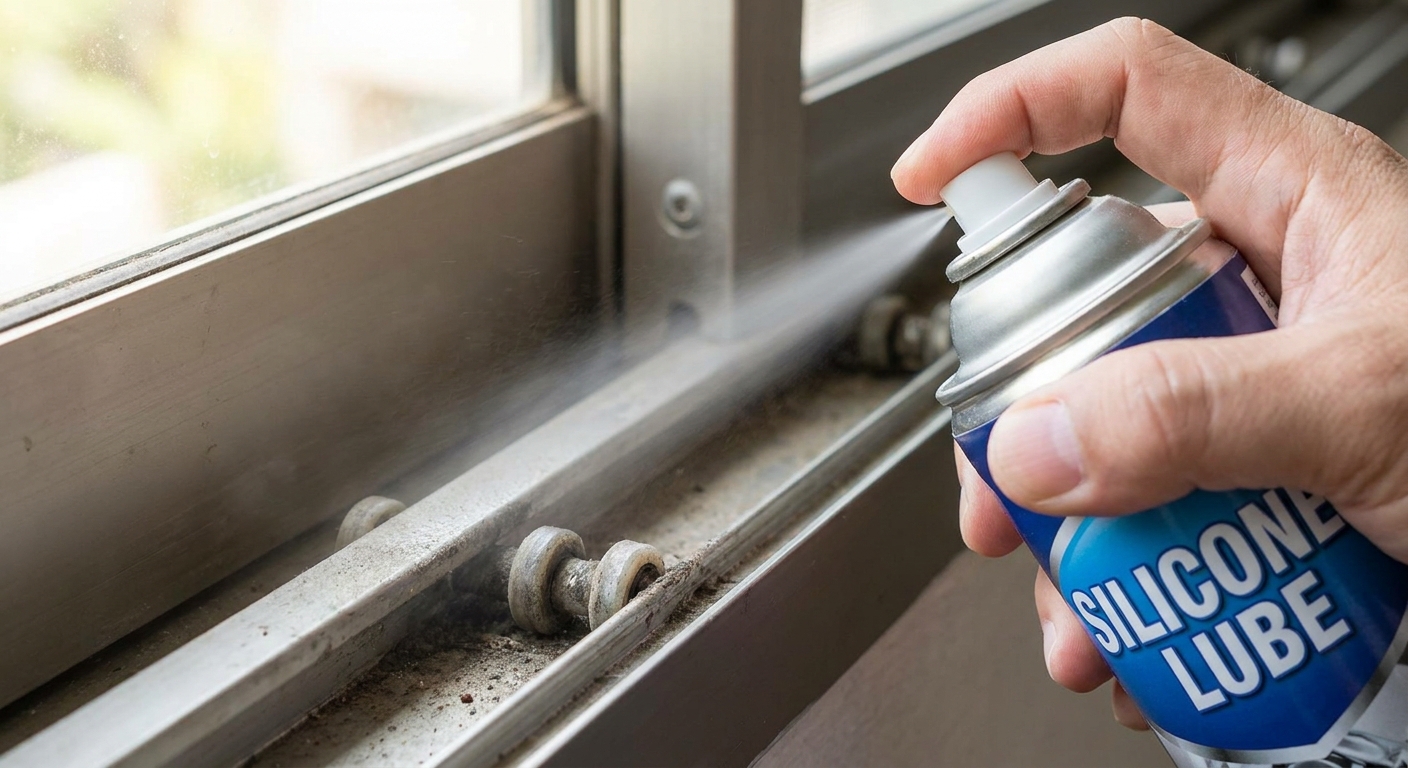
- Best overall: PTFE dry lube (goes on wet, dries slick, attracts less dirt)
- Also good: Silicone spray (slick, water-resistant, common and effective)
- Avoid: Grease, oil, petroleum jelly, heavy lithium grease on the track. They collect grit fast.
How to apply
- With the door open, spray a light coat along the raised rail where the rollers ride, not the entire channel.
- Wipe excess with a rag. You want “slick,” not “wet.”
- Slide the door back and forth 10 to 20 times to distribute.
- If you used PTFE dry lube, give it a few minutes to flash off and dry before the final wipe.
- Wipe any overspray off the frame, weatherstripping, and lock area so it does not collect dust.
If it still sticks
Worn or broken rollers
If the door still feels rough after cleaning and adjustment, the rollers may be pitted, flat-spotted, or seized. You will often hear a thumping sound or feel a rhythmic bump as it rolls.
What to do: Replace the rollers. It is not a glamorous job, but it is very doable.
- Buy rollers that match your door brand and style. Take a photo of the roller assembly and measurements if you can.
- Many doors require lifting the panel out to replace rollers. If your door is heavy or tall, grab a helper.
Door rubs because it is out of square
If the door rubs the frame at the top corner, the rollers might be adjusted unevenly, or the frame could have shifted slightly over time.
What to do: Re-check roller adjustment and make the gap even from top to bottom. If the frame itself is racked, that becomes a bigger door and framing conversation, but most of the time it is just roller height.
Other common culprits
- Debris in the top track: Re-clean the top track and corners.
- Damaged or missing guides: Some doors have guides in the track that keep the panel aligned.
- Anti-lift blocks set too tight: These can rub the top of the door and make it bind.
- Loose fasteners: Screws in the frame or track can work loose and create drag points.
Damaged track rail
Deep gouges and dents can cause sticking no matter what you do. Track caps can sometimes give rollers a new smooth surface to ride on without a full replacement.
Roller replacement basics
If you are swapping rollers, these basics help you avoid the classic “now the door is stuck in the opening” moment.
- Lower the rollers first: Back the adjustment screws off so the rollers retract and the panel sits lower.
- Check for stops: Look for anti-lift blocks or small brackets at the top that prevent the panel from being lifted out. Remove them if needed and keep the screws together.
- Lift and tilt: With a helper, lift the panel up into the head track, then tilt the bottom out and set it down on a protected surface.
- Protect the floor: Use cardboard or a moving blanket. Aluminum frames scratch easily.
- Reverse to reinstall: Tilt the bottom in, lift up, set rollers onto the rail, then re-adjust height slowly and evenly.
Quick maintenance routine
- Monthly: Vacuum the bottom track (and a quick pass on the top track does not hurt).
- Every 3 to 6 months: Wipe the rail clean and apply a light refresh coat of PTFE or silicone.
- Anytime you hear grinding: Stop and clean before it chews up the rollers.
Troubleshooting chart
| Symptom | Likely cause | Fix |
|---|---|---|
| Crunchy, gritty feel | Dirt in track (bottom or top) | Vacuum, scrub, wet clean, dry |
| Door is hard to move and feels like it is dragging | Rollers too low or worn | Adjust rollers up; replace rollers if needed |
| Sticks at one specific point | Dent, screw head, hardened gunk | Inspect rail; tighten screws; remove gunk; consider track cap |
| Door rubs frame near top | Uneven roller height or binding at top | Adjust left and right until reveal is even; check anti-lift blocks |
| Squealing noise | Dry rollers or debris | Clean first, then apply light dry lube |
FAQ
Can I use WD-40 on a sliding glass door track?
You can use it in a pinch to clean and loosen grime, but I do not recommend it as a lasting track lubricant. Wipe it off and follow with silicone spray or PTFE dry lube.
Should I lubricate the entire bottom channel?
No. Lubricate the raised rail where the rollers actually ride. Coating the whole channel makes it easier for grit to stick and turn into sludge.
Why is my sliding door harder to open in winter?
Cold weather can tighten clearances as materials contract, and old grease or built-up grime can feel more stubborn. A deep clean plus roller adjustment usually fixes it. If you have water pooling in the track, check and clear the drain holes and inspect weatherstripping.
Do I have to remove the door to fix sticking?
Usually not. Cleaning the track (top and bottom) and adjusting rollers solves most sticking issues without pulling the panel. You typically remove the door only to replace rollers or fix major track damage.
When to call a pro
- The glass is cracked, loose in the frame, or the panel feels unstable
- The track is severely bent or separating from the sill
- You cannot lift or handle the panel safely, especially on tall or oversized doors
- The door keeps jumping the track even after careful roller adjustment
If you tackle the cleaning, adjustment, and the right lubricant in that order, you will be surprised how smooth a “hopeless” sliding door can feel. The trick is doing less spraying and more scrubbing. Your rollers will thank you.