A squeaky door hinge is one of those tiny problems that somehow gets louder the moment you are trying to be quiet. The good news is you usually do not need new hinges or a handyman visit. You just need the right lubricant in the right place, and sometimes a little cleaning or tightening so the fix actually sticks.
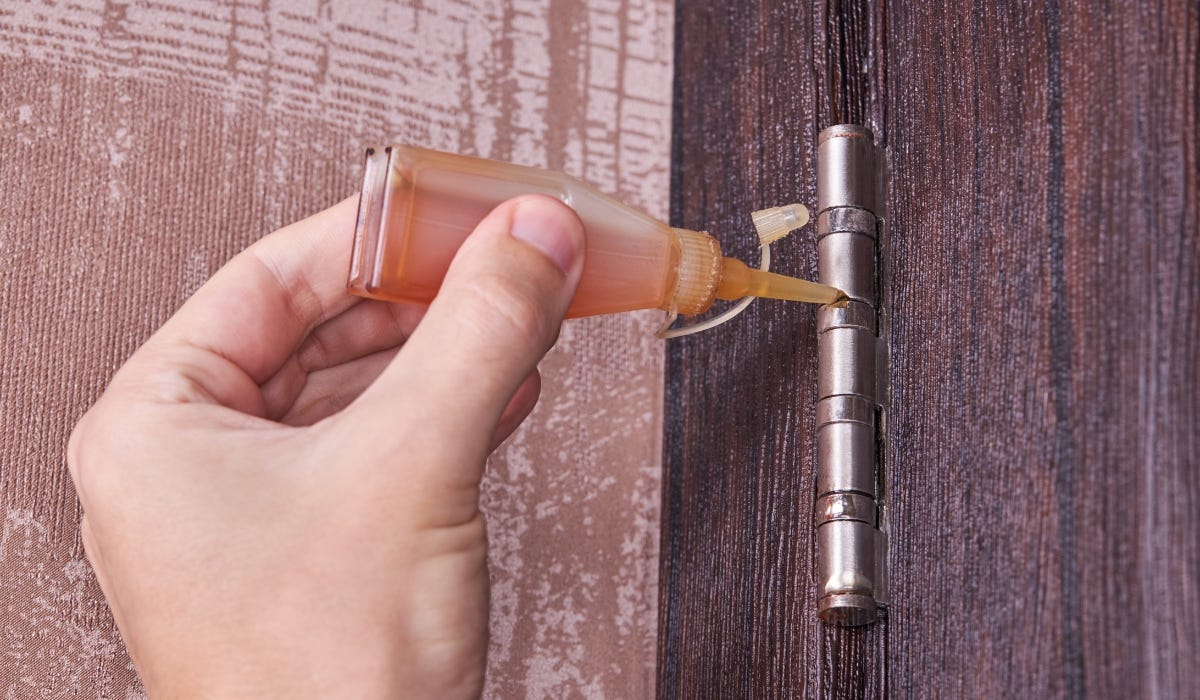
Below are five quick ways to shut a hinge up, using common household items and a couple of purpose-built lubricants. I will also show you how to keep the squeak from coming back next week.
Before you lubricate: one minute of prep
If you skip prep, you can still get a short-term win, but squeaks love to return when dirt, paint, or loose screws are the real culprit.
- Make sure it is the hinge: Open and close the door slowly while listening. If the noise seems to come from the latch side, the culprit may be the latch or strike plate, or the door rubbing the jamb.
- Find the squeaky hinge: While you open and close the door, put a fingertip lightly on each hinge knuckle. The noisy one usually telegraphs vibration.
- Wipe off grime: Use a dry rag first. If there is sticky buildup, use a rag lightly dampened with warm water and a drop of dish soap. Dry it well.
- Protect nearby surfaces: Slide a piece of cardboard or an old towel under the hinge side. If you are using a spray, hold a rag or a strip of cardboard behind the hinge to shield the trim and wall.
- Check for loose screws: Snug hinge screws by hand with a screwdriver. Do not crank them like you are tightening lug nuts.
- Ventilate for sprays: Crack a window or run a fan if you are using silicone or lithium spray products.
If the hinge is painted shut or packed with gunk, jump down to the “When lube is not enough” section after you try one method.
Method 1: Silicone spray
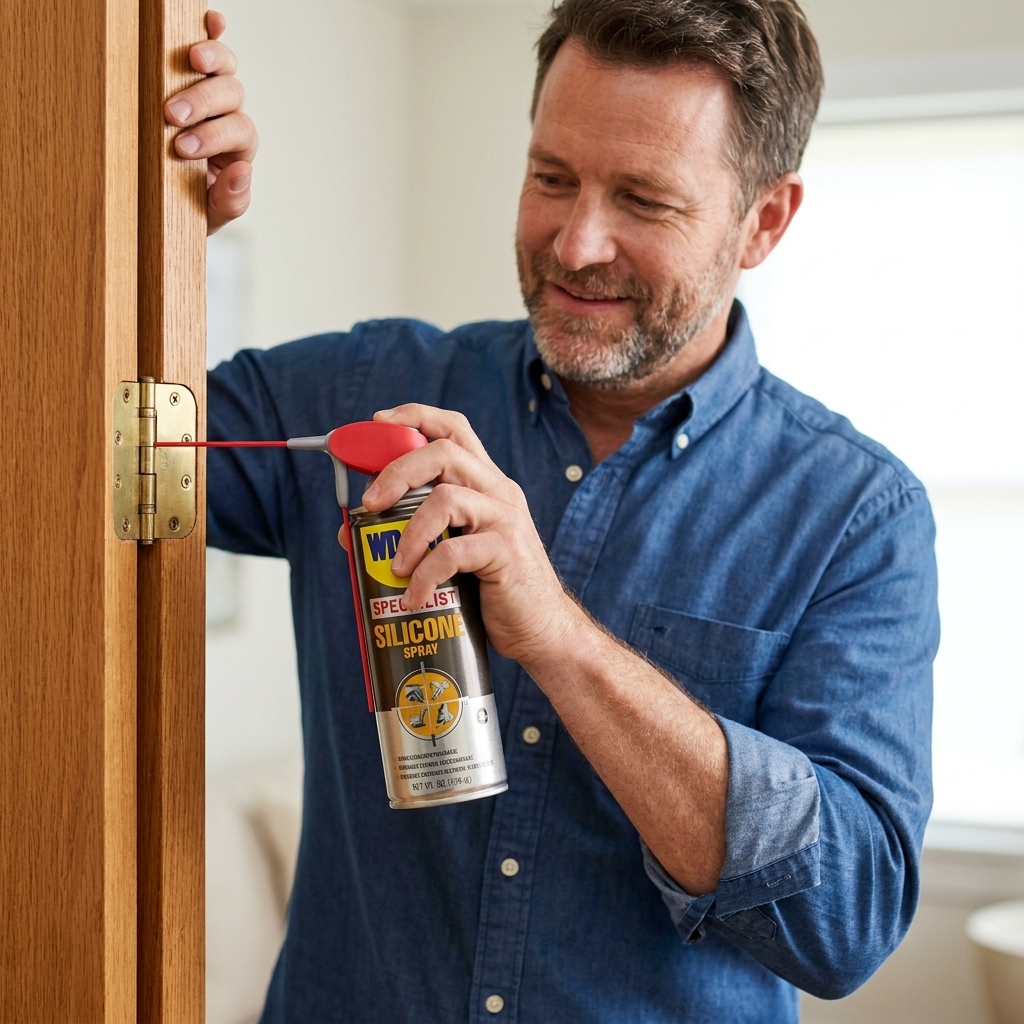
If you want a clean, low-mess approach that is often long-lasting for interior doors, silicone spray is my favorite. It tends to stay cleaner than wet oils, but it can still collect grime over time if you overspray.
Steps
- Shake the can and attach the straw nozzle.
- Spray a short burst into the gap between the knuckles, aiming for the seam where the pin rotates.
- Open and close the door 10 to 15 times to work it in.
- Wipe away any overspray with a clean rag.
Pro tip
If you can see paint or debris packed into the hinge seams, spray, work the door, wipe, then spray again. Two light passes beat one heavy one.
Method 2: White lithium grease
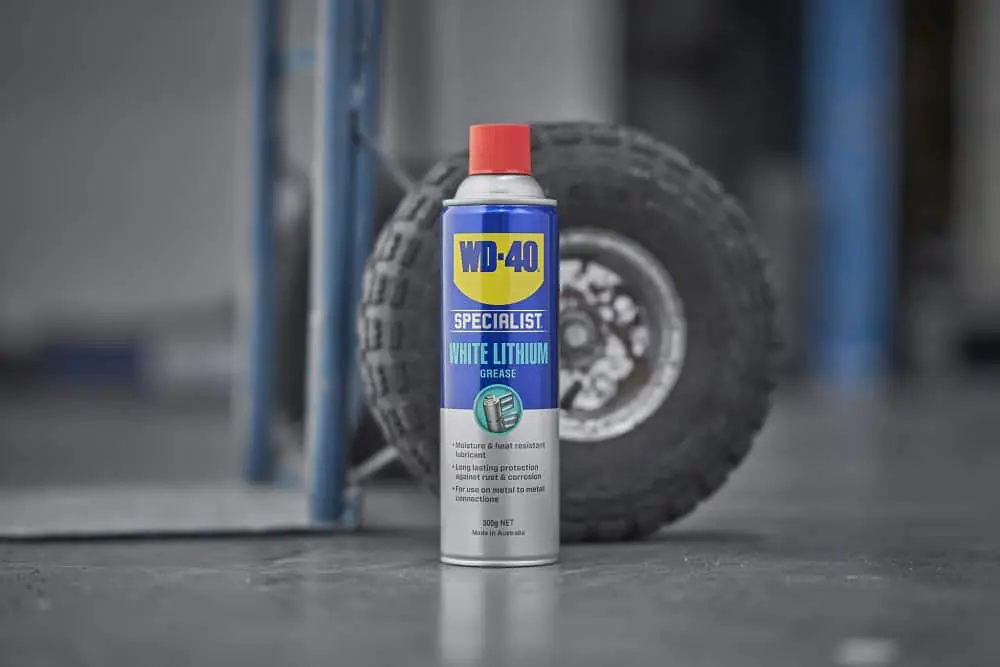
White lithium grease is a classic for a reason. It is thicker than silicone, clings well, and is a great choice for stubborn squeaks on older hinges or doors that see temperature swings.
Steps
- If your product has a straw nozzle, use it for precision.
- Apply a small amount to the hinge knuckles where the pin rotates.
- Swing the door back and forth until the noise stops.
- Wipe any excess immediately. This stuff can collect dust if you leave a blob.
Where it shines
- Exterior entry doors
- Garage-to-house doors
- Older, slightly worn hinges
Method 3: Paraffin wax
If you have a plain white candle or a block of paraffin wax in a drawer, you have a solid squeak fix that stays fairly clean. Wax is a dry lubricant, so it does not drip and it does not attract grime the way oils can.
Steps
- Open the door so you can access the hinge seam.
- Rub the candle wax directly along the hinge knuckles and the seam around the pin.
- Move the door several times to work wax into the hinge.
- Wipe off visible crumbs of wax.
Good to know
Wax is great for light-to-moderate squeaks. If the hinge is rusty or the door is heavy and constantly used, silicone or lithium grease usually lasts longer.
Method 4: Bar soap
This is the “I need this fixed before the baby wakes up” option. Soap is not a true long-term lubricant, but it can reduce friction at the hinge pin area enough to stop squeaks fast, and most homes have it.
Use plain bar soap (the basic, chalky kind works best). Avoid moisturizing bars. Those tend to be softer and can leave goo behind.
Steps
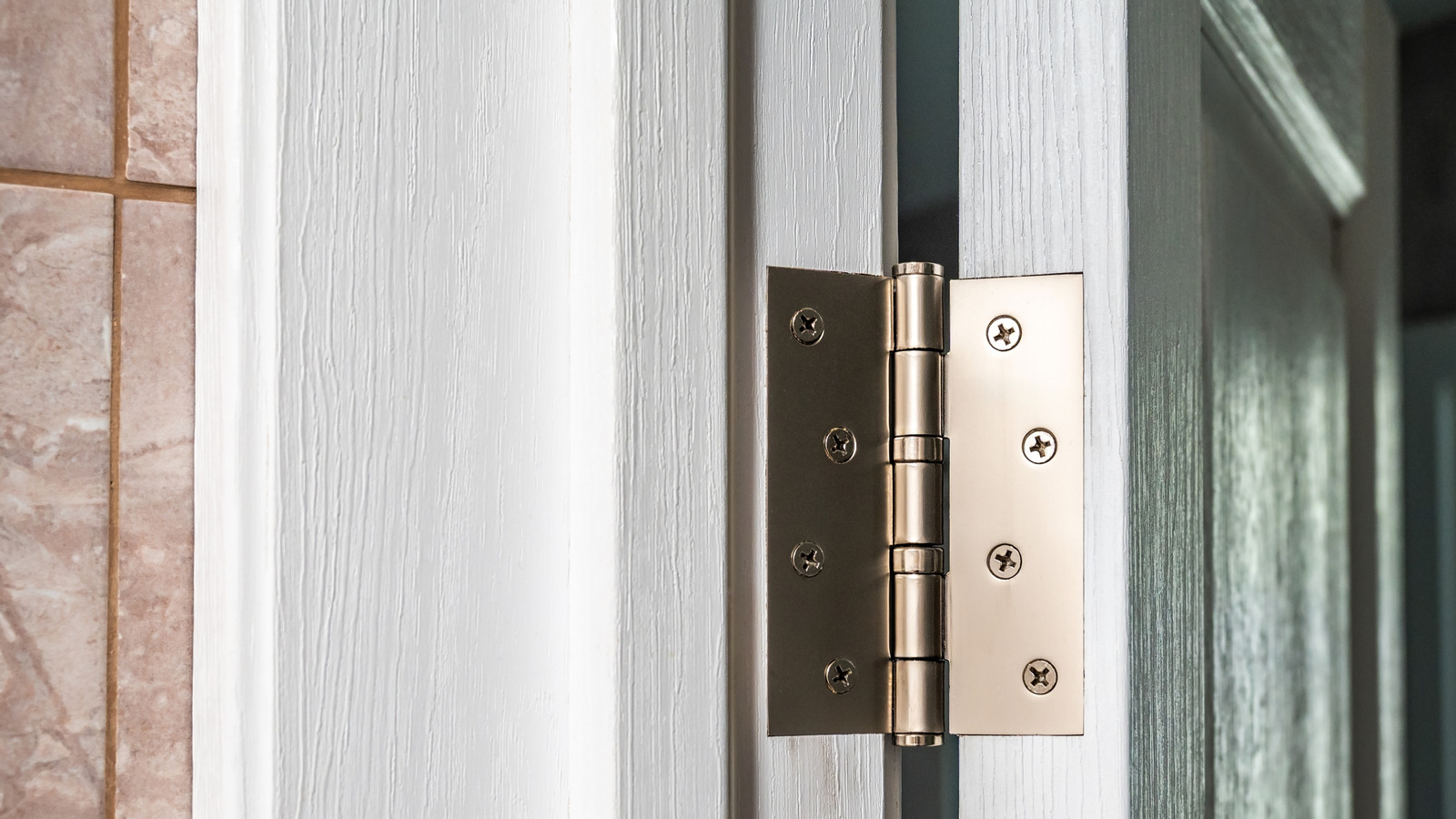
- Rub the bar soap along the hinge knuckles and around the pin seam.
- Open and close the door repeatedly to work it in.
- Wipe any residue so it does not collect dust.
When to choose soap
- You need a fast fix and have no sprays on hand
- You want a relatively clean, low-odor option
Method 5: Dry graphite
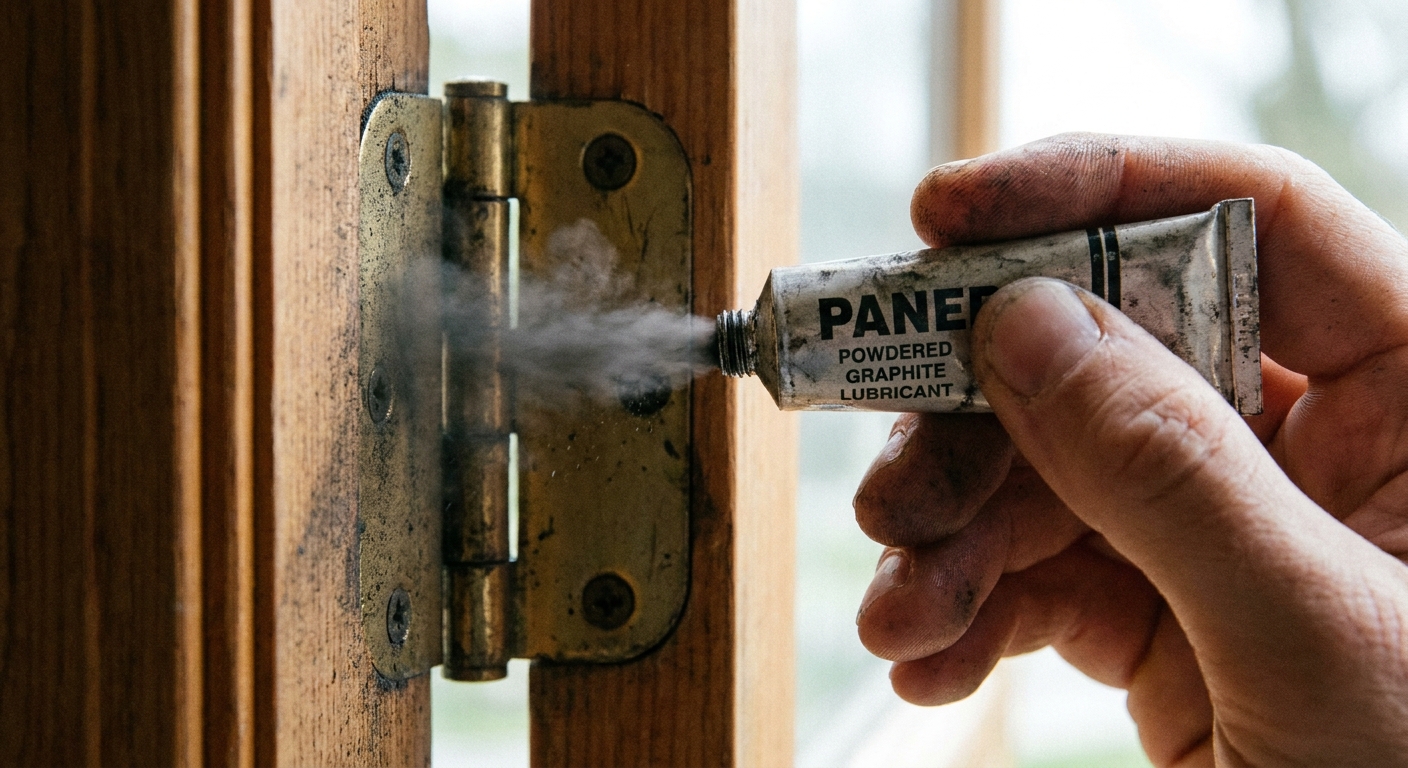
Graphite is a dry lubricant that works well where you do not want anything wet that can grab dust, pet hair, or sawdust. If you have a small tube of powdered graphite (often sold for locks), it can do a nice job on squeaky hinges too.
One catch: graphite stains. On painted trim and light-colored jambs, silicone is usually the safer indoor choice unless you truly need a dry, dusty-environment lube.
Steps
- Place a towel under the hinge. Graphite is messy and it stains.
- Puff a tiny amount into the hinge knuckle seam near the pin.
- Swing the door back and forth to distribute it.
- Wipe away stray powder immediately.
Important caution
Graphite is great when you keep it controlled. If you overdo it, you will be chasing black smudges around a white door jamb. Ask me how I know.
When lube is not enough
If the squeak comes back quickly, the hinge probably needs more than lubrication. Here are the common repeat-offender causes and fixes.
1) Pull the hinge pin, clean it, then re-lube
This is the most permanent fix short of replacing hardware. You are cleaning the actual rubbing surfaces instead of just coating over grime.
Quick check first: some hinges have non-removable pins or decorative caps that make pin removal a no-go. If your pin will not move with gentle tapping, do not force it. Use spray, wax, or grease at the seams instead.
- Close the door most of the way so it is stable.
- Work on one hinge at a time. Do not pull multiple pins at once unless you have the door supported.
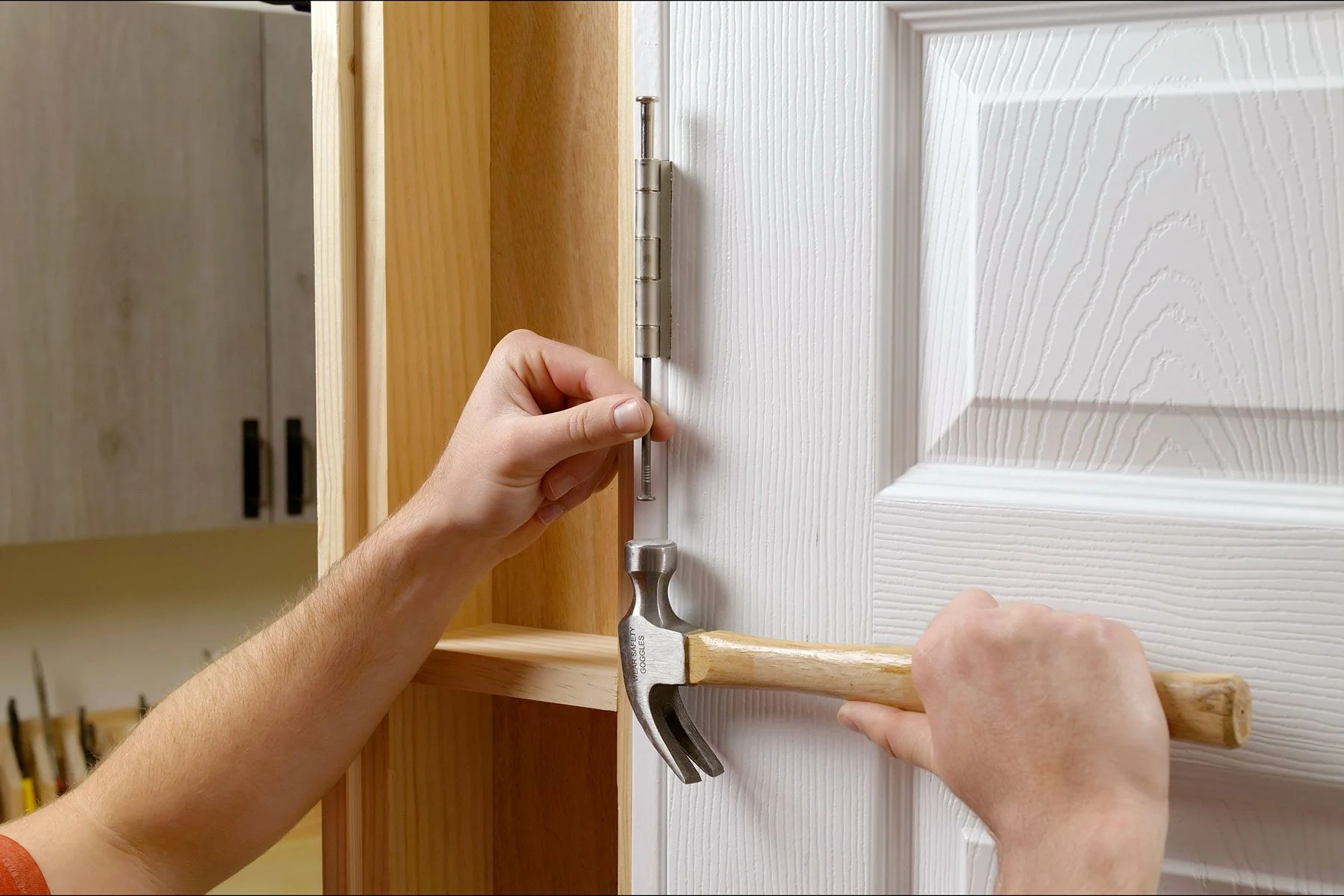
- Place a flathead screwdriver at the bottom of the hinge pin and tap upward with a hammer until the pin lifts.
- Pull the pin out. Wipe it clean with a rag. If it is rusty, buff lightly with fine steel wool.
- Apply lubricant to the pin (silicone or lithium grease work best here).
- Slide the pin back in and tap it down until seated.
- Swing the door to distribute lubricant and wipe excess.
2) Tighten or fix stripped hinge screws
A hinge that shifts can squeak even if it is lubricated. If a screw just spins, you likely have a stripped hole.
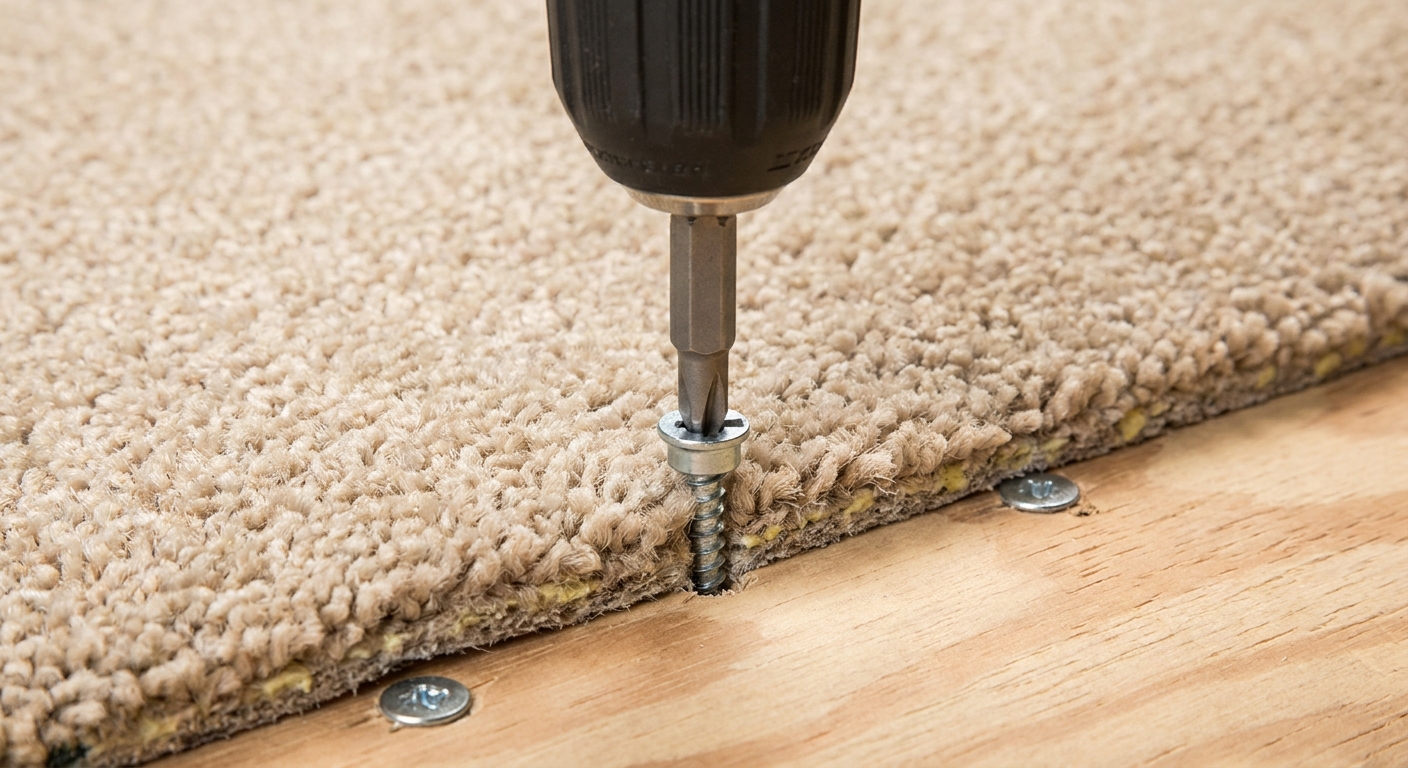
- Quick fix: Remove the loose screw, push in a couple toothpicks dipped in wood glue, snap them flush, then reinstall the screw after the glue sets.
- Better fix (when framing is behind it): Replace one short screw in each hinge leaf with a longer screw that often reaches the stud or solid framing behind the jamb.
- If you have a metal frame or no solid backing: A longer screw may not bite into anything meaningful. In that case, use the toothpick-and-glue method on wood, or the appropriate metal anchor or through-bolt approach for your frame type.
3) Deal with paint-packed hinges
Paint can act like glue inside hinge seams. If the hinge looks sealed along the knuckles, carefully score paint lines with a utility knife, then lubricate again. Go slow. One slip and you will be doing touch-up paint instead of enjoying your newly quiet door.
4) Check the latch and rub points
If lubrication does nothing, the squeak may not be the hinge. A dry latch can squeak against the strike plate, and a door that rubs the jamb can creak and chirp. A tiny dab of silicone on the latch bolt (wipe excess) and a quick hinge-screw adjustment to square the door can solve what sounds like a hinge problem.
What to avoid
- Cooking oil: It works briefly, then turns sticky and attracts dust.
- WD-40 as a permanent lube: It can quiet things down initially, but it is primarily a water displacer and penetrating cleaner with light lubrication. If you use it, follow up with silicone or lithium grease after it dries.
- Soaking the hinge: More product is not better. A controlled application lasts longer and makes less mess.
Quick pick
| Situation | Best choice |
|---|---|
| Most interior doors, want clean results | Silicone spray |
| Heavy door or older hinge, squeak keeps returning | White lithium grease (and consider pulling the pin) |
| No spray on hand, want a tidy household fix | Paraffin wax |
| Need an emergency fix right now | Bar soap |
| Dusty shop, pets, or you hate oily residue | Dry graphite |
FAQ
Do I need to remove the door to fix a squeak?
Almost never. Sprays, wax, and soap can be applied with the door in place. Pulling a hinge pin for cleaning also does not require removing the door if you work one hinge at a time and keep the door mostly closed and stable.
Why does the squeak come back after a day or two?
Usually one of three things: the hinge pin is dirty or rusty, the hinge screws are loose and the hinge is shifting, or you used a light lubricant that did not stay put for your door and environment. Pulling the pin to clean and then re-lubing is the long-term cure in most cases.
Can I use petroleum jelly?
It can work in a pinch, but it is greasy and will collect dust. If you use it, apply very sparingly and wipe thoroughly. For a longer-lasting result, silicone spray or lithium grease is a better choice.