I grew up holding the flashlight for my dad while he poked around in the breaker panel like it was a treasure chest. As a kid, I thought breakers were just fussy switches that liked to ruin movie night. After a decade as a contractor, I learned the truth: a breaker that trips is usually doing its job, protecting your wiring from heat and fire.
If your circuit breaker keeps tripping, you can often narrow it down to one of three causes: an overloaded circuit, a short circuit, or a ground fault. The trick is learning the patterns, then troubleshooting in a safe, methodical way.
First, a quick safety check
Electricity is not a “learn by trial and error” hobby. The steps below are homeowner-safe because they focus on observation, unplugging, and resetting. You may open the panel door to flip breakers, but you do not remove the panel cover or work on live wiring.
- Do not remove the panel cover or touch any wiring.
- Do not repeatedly reset a breaker that trips immediately. That is a sign of a serious fault.
- If you see or smell anything alarming, stop and call a licensed electrician.
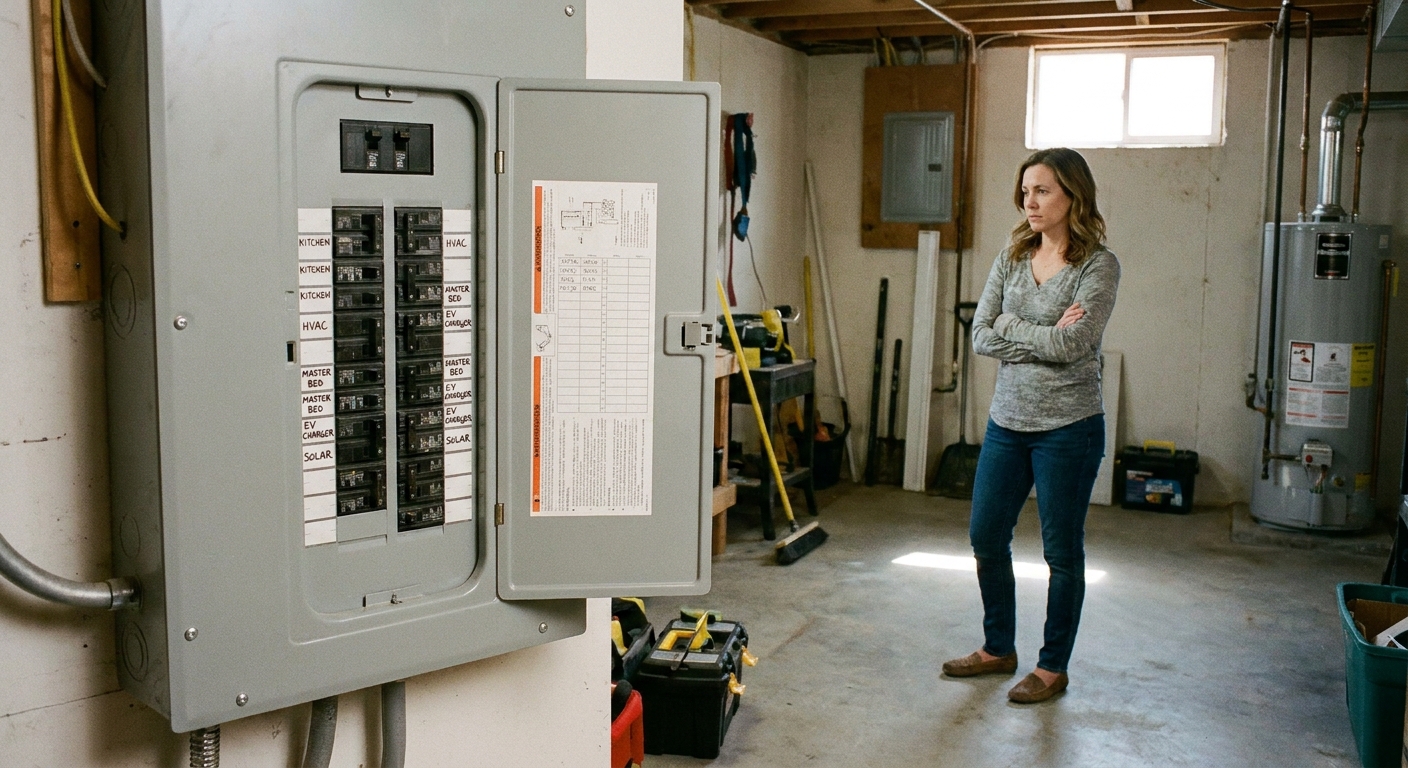
The main reasons a breaker trips
Here’s the plain-English version of what your breaker is reacting to.
1) Overloaded circuit
An overload happens when you ask a circuit to supply more amperage than it is designed for. The breaker warms up and trips to prevent the wiring in the walls from overheating.
Common overload culprits: space heaters, window AC units, hair dryers, air fryers, toasters, microwaves, vacuum cleaners, portable dehumidifiers, and multiple high-draw devices running at once.
2) Short circuit
A short circuit is a hard fault. The electrical current takes an unintended low-resistance path, causing a sudden spike. Breakers trip fast in this scenario.
Common causes: damaged appliance cords, loose connections in a receptacle, a nicked wire, a failed appliance motor, or wiring damage from nails, screws, rodents, or age.
3) Ground fault
A ground fault is when current leaks off the intended hot-to-neutral path and finds another return route, often through moisture, damaged insulation, metal parts, or a wet surface. This can shock people, especially in damp areas.
Common causes: wet outdoor receptacles, bathroom or kitchen devices, sump pumps, dishwashers, washing machines, garage tools, or any appliance near water.
A quick note about AFCI and “mystery trips”
In many newer homes, the “breaker” is not just a basic on-off switch. You may have:
- GFCI breakers that trip on ground faults.
- AFCI breakers that trip when they sense arcing (a sparking condition that can start fires).
- Dual-function breakers that combine AFCI and GFCI protection.
If your breaker has a test button, it is likely one of these. AFCI trips can feel random because they are sometimes triggered by things like vacuums, treadmills, older cords, certain LED drivers, or a loose connection that is arcing. The troubleshooting steps in this article still apply (unplug, isolate, observe), but repeated AFCI trips are a strong reason to call an electrician, especially if you cannot tie them to one device.
How to tell which one you have
You can often diagnose the cause by when it trips and what was running.
Clues for an overloaded circuit
- The breaker trips after a minute or two, not instantly.
- It happens when you run multiple high-wattage devices at once.
- It might be worse during extreme heat or cold when HVAC equipment is working hard.
- You can often “make it trip on purpose” by plugging in one more big load.
Clues for a short circuit
- The breaker trips immediately when you turn something on or plug something in.
- It may trip the moment you reset it, even with nothing obvious running.
- You may see a flash or hear a pop from a receptacle or device when the fault happens.
Clues for a ground fault
- Tripping happens in damp locations or after rain, washing, or mopping.
- It happens with a specific tool or appliance, especially one with a motor or heating element.
- A GFCI receptacle (with “Test” and “Reset” buttons) may trip. If the circuit is protected by a GFCI, AFCI, or dual-function breaker, the breaker may trip as well.
A simple pattern test
Answer these two questions:
- Does it trip only when a specific device runs? That points to a bad appliance, cord, or plug.
- Does it trip only when several things run together? That points to overload.
If it trips instantly and unpredictably, treat it like a potential short, ground fault, or arc-fault condition and move to the safe isolation steps below.
Quick load math for overloads
You do not need a meter to do a sanity check. Most general-use circuits in homes are:
- 15 amp circuits: about 1,800 watts max (15A x 120V).
- 20 amp circuits: about 2,400 watts max (20A x 120V).
For loads that run for a long time (space heaters, portable AC, dehumidifiers), a good rule of thumb is to stay around 80% of that limit. That is roughly 1,400W on a 15A circuit and 1,900W on a 20A circuit. One “1500W” space heater can basically take up an entire 15A circuit by itself, which is why adding a hair dryer or microwave can tip it over the edge.
How to reset a tripped breaker
This sounds basic, but it matters. Many breakers will not fully reset unless you move them all the way to OFF first.
- Unplug sensitive electronics on that circuit (computers, TVs, game consoles).
- At the panel, find the breaker that is tripped. It may be slightly out of line with the others, or it may show a small red or orange indicator window depending on the model.
- Push the breaker firmly to OFF.
- Then flip it back to ON.
- Plug devices back in one at a time.
If the breaker will not stay on, stop. That is not an overload you can “power through.”
Fix 1: Solve an overloaded circuit
If your clues point to overload, the fix is usually boring but effective: reduce the load on that circuit.
Steps to reduce the load
- Identify what was running when it tripped: heater, microwave, toaster oven, hair dryer, vacuum, etc.
- Move one high-draw appliance to a different circuit. Try a receptacle in another room that you know is on a different breaker.
- Avoid power strips for high-draw appliances. Power strips do not increase circuit capacity. They just make it easier to overload.
- Give dedicated appliances their own space. Microwave, air fryer, toaster oven, and kettle all on one countertop circuit is a classic trip recipe.
Common overload hotspots
- Kitchen counters: multiple small appliances and a busy family schedule.
- Bathroom: hair tools on the same circuit as lights or a space heater.
- Garage: shop vac plus a table saw or compressor.
- Bedrooms: space heater plus gaming PC or window AC.
A note on extension cords
Extension cords are OK temporarily for light loads, but they are not a long-term fix for a circuit that is undersized for how you live. Never run heaters or portable AC units on a cheap, skinny cord, and never hide extension cords under rugs or furniture where they can overheat. If you have to use one briefly, use a heavy-duty cord that is rated for the appliance and keep it fully uncoiled.
If overload is a frequent lifestyle problem (like you need a space heater there every winter), the long-term fix is often a new dedicated circuit. That is electrician territory in most cases.
Fix 2: Find the device that trips it
When one device consistently triggers the trip, you can usually isolate it safely without tools.
Steps to isolate the culprit
- Unplug everything on that circuit (including lamps, chargers, and “forgotten” stuff like treadmills).
- Reset the breaker correctly (OFF then ON).
- Plug devices back in one at a time and give each one a moment to run.
- When the breaker trips, the last thing you plugged in is your prime suspect.
What to inspect on the suspect device
- Cord damage: cuts, flattened spots under furniture, chew marks, melted areas.
- Plug condition: discoloration, loose blades, cracking.
- Smell: a “hot plastic” odor from the device or cord.
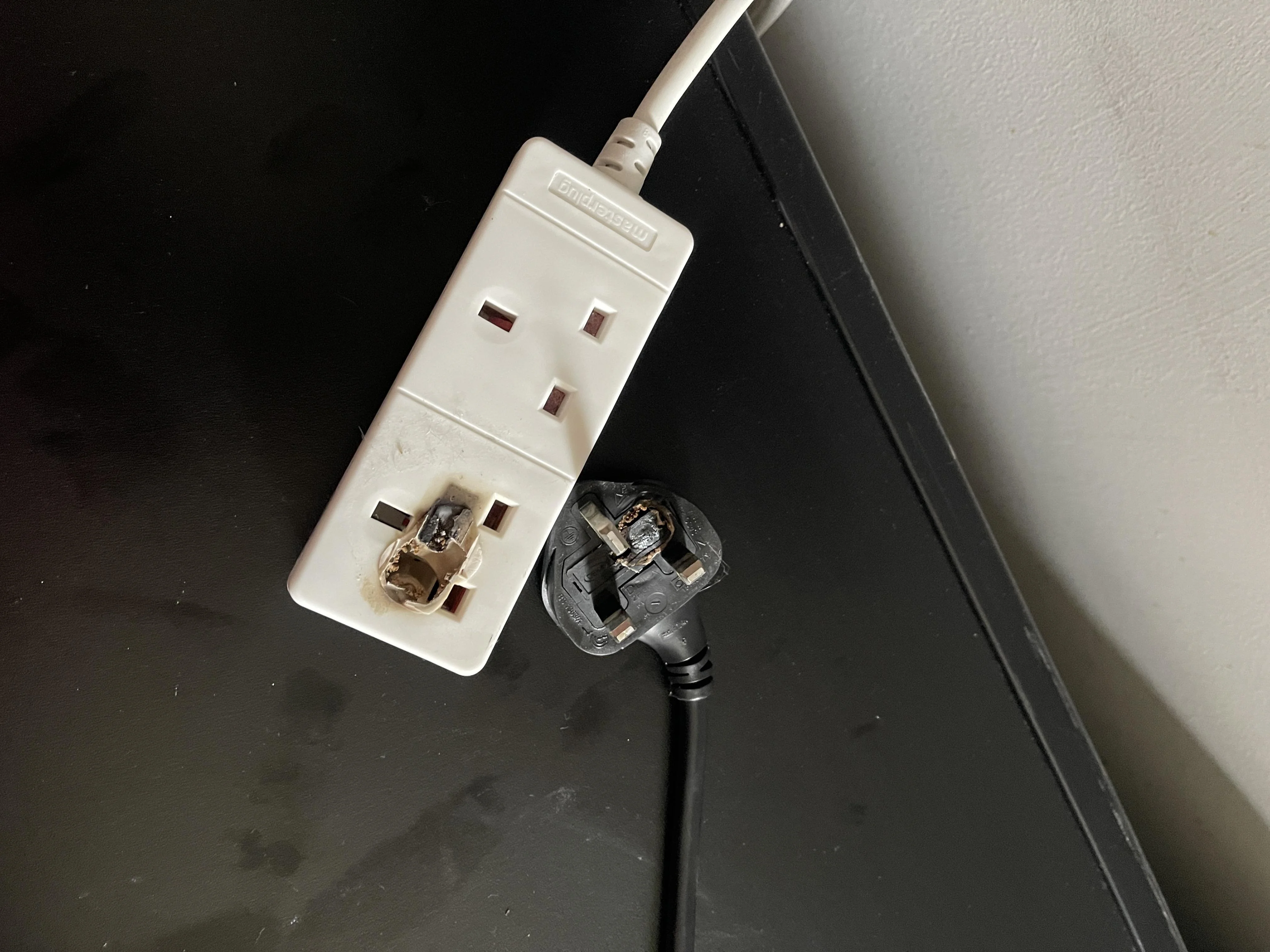
If the device is hardwired (dishwasher, disposal, furnace, well pump), stop here and call a licensed electrician or the appropriate service pro. Hardwired troubleshooting can get dangerous fast.
Fix 3: Suspect a short or fault
Shorts, ground faults, and arc-fault issues are the cases where homeowners can identify symptoms and remove obvious triggers, but you should not push past the “safe edge.” The goal is to gather information and avoid repeating a dangerous event.
Safe checks you can do
- Check for moisture: Is an outdoor receptacle wet? Has it rained? Any dampness under a sink where a disposal or dishwasher plugs in?
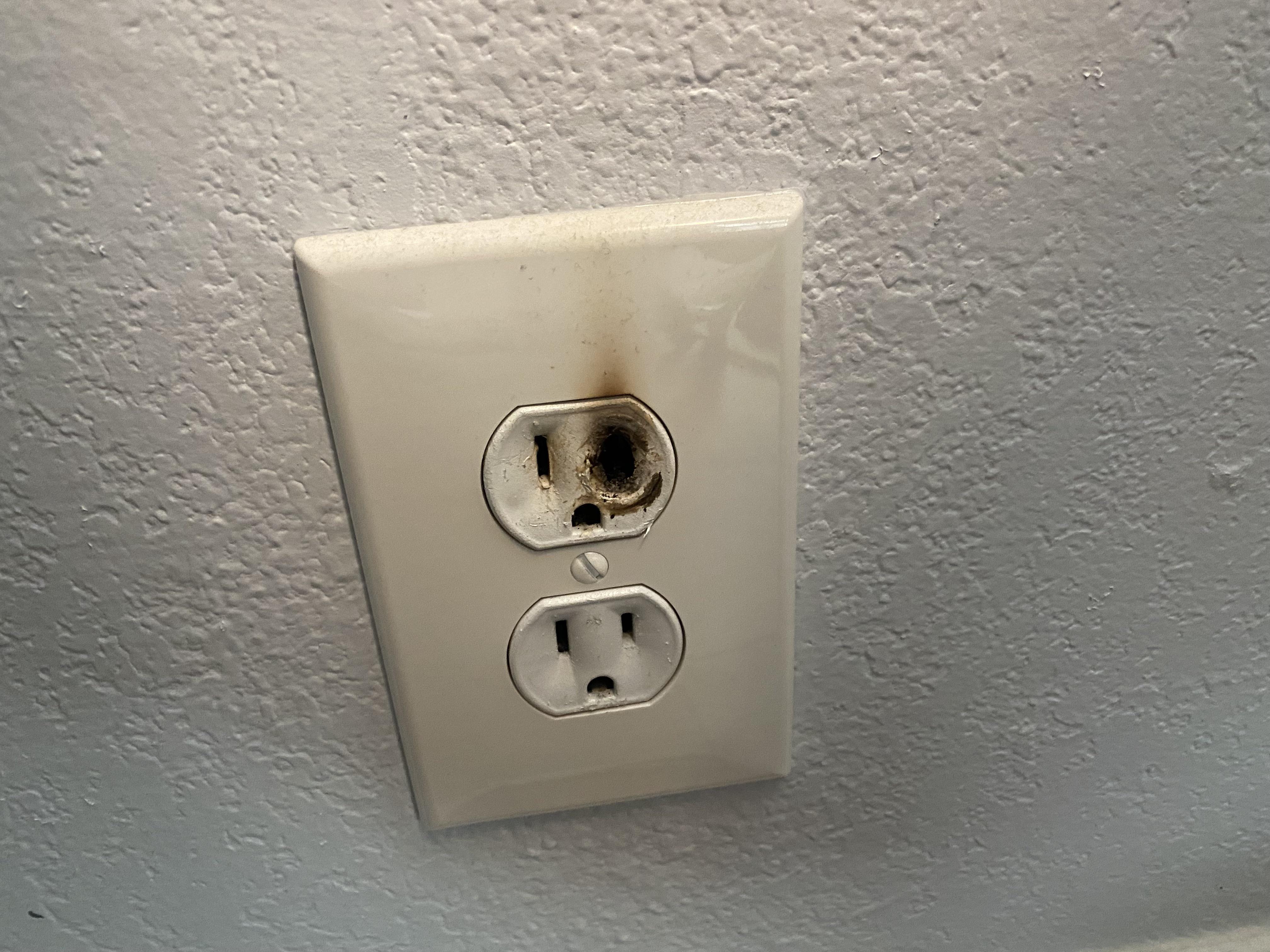
- Look for one problem receptacle: Any outlet that is warm, discolored, cracked, or smells burnt.
- Try the circuit with nothing plugged in: If it still trips, the issue may be in the wiring, a switch, a light fixture, a hardwired load, or the breaker itself.
- Reset any tripped GFCI receptacles: In kitchens, baths, garages, basements, and outdoors, a tripped GFCI can be part of the story. Press “Reset” firmly.
When a switch or fixture is involved
If the breaker trips when you flip a specific switch, leave that switch off and keep the breaker off until it is inspected. Common issues include a failing fixture, a pinched wire in the box, a problem in a ceiling fan, or a loose connection that is arcing.
Anything beyond these checks is usually a job for an electrician because it involves opening boxes, testing live circuits, and inspecting connections.
Do this, not that
- Do: Unplug everything and add loads back one at a time. Not: Reset and hope.
- Do: Move high-draw appliances to other circuits. Not: Stack power strips and extension cords.
- Do: Treat instant trips as a serious warning. Not: Keep forcing the breaker on.
- Do: Replace obviously damaged cords or retire the appliance. Not: Tape up a cracked cord and call it “good enough.”
Red flags: call an electrician
I love DIY. I also love houses that do not catch fire. If you notice any of the following, stop troubleshooting and bring in a pro:
- Burning smell at the panel, an outlet, a switch, or an appliance
- Hot breaker, hot panel cover, or warm outlets
- Buzzing, sizzling, popping, or crackling sounds
- Visible smoke or scorch marks
- Breaker trips immediately after reset, especially with nothing plugged in
- Flickering lights paired with breaker trips
- Water intrusion in the panel area or consistently wet receptacles
- Older homes with frequent electrical issues or signs of DIY wiring you do not trust
FAQ
Is it dangerous if a breaker keeps tripping?
It can be. An occasional trip from running a space heater and a hair dryer on the same circuit is usually an overload problem and fixable. Repeated trips, instant trips, burning smells, heat, buzzing, or signs of moisture are warning signs of a fault that needs professional attention.
Can I just replace the breaker?
Sometimes a breaker does fail or become weak with age, but it is not the first assumption. More often, the breaker is reacting to a real overload, short, ground fault, or arc-fault condition. Breaker replacement involves working inside the panel, which is not a beginner DIY task.
Why does it only trip at night or when it rains?
Night trips can line up with heaters, lighting loads, or HVAC cycling. Rain-related trips often point to moisture in an outdoor receptacle, a damp junction box, or a ground fault in exterior wiring.
What if the breaker is labeled wrong?
That is common. If you are not sure what is on the circuit, plug a lamp into an outlet you suspect is on that breaker, then flip the breaker off to confirm. If you are mapping circuits, do it in daylight, and keep a phone handy.
The bottom line
A breaker that keeps tripping is giving you useful information. If it trips after piling on multiple appliances, treat it like an overload and redistribute the load. If it trips instantly with one device, suspect that appliance or cord. If it trips instantly with nothing plugged in, or you notice heat, smell, moisture, or noise, shut it down and call a licensed electrician.
Slow and steady troubleshooting beats guesswork every time. Your future self, and your wiring, will thank you.