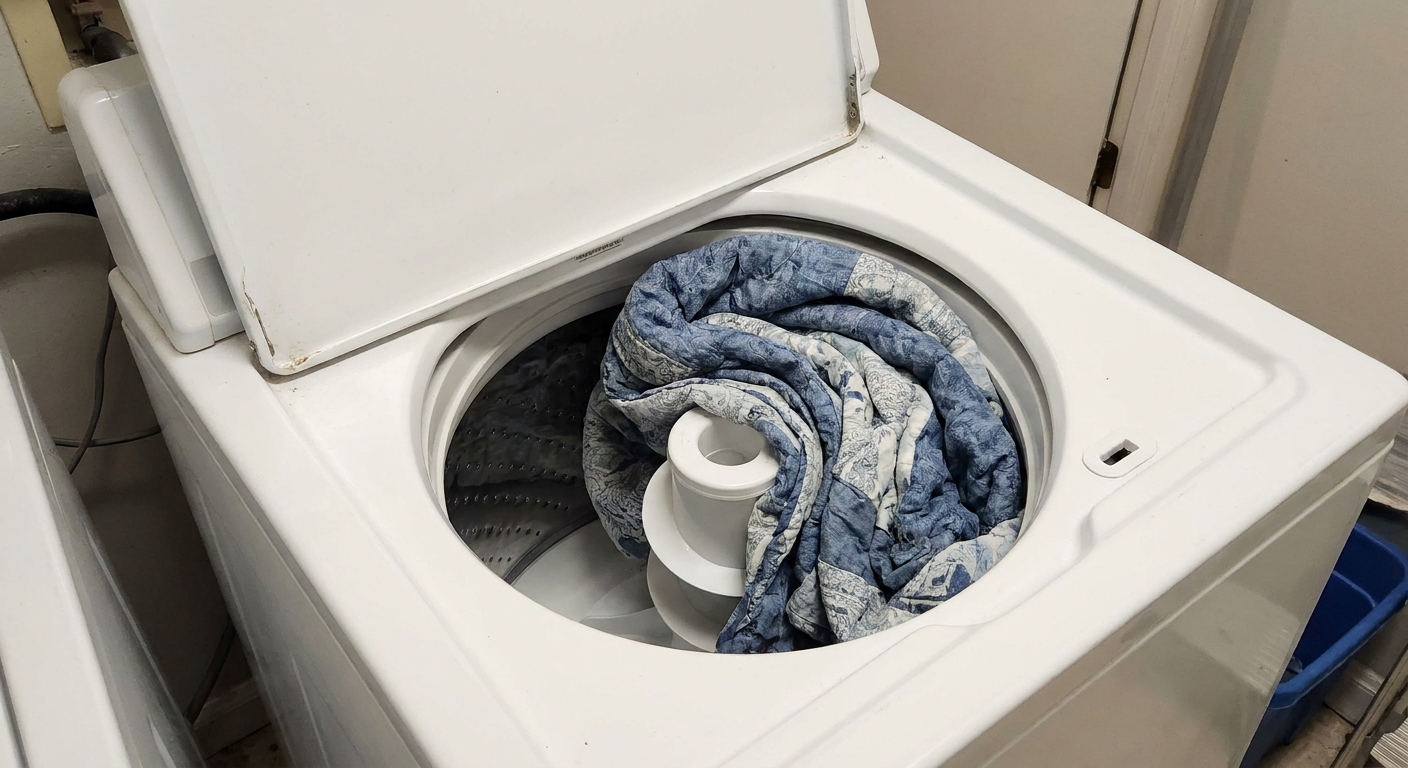
I learned this one the hard way on a Saturday morning years ago. My washer would fill and agitate like a champ, then hit the spin cycle and just… stare into space. I spent an hour convincing myself it was “probably the motor,” only to find a bunched-up comforter had the tub so off-balance the machine refused to spin. I was equal parts relieved and annoyed.
If your washer fills and agitates but never reaches spin, or it spins so slowly your clothes come out dripping, you can troubleshoot it in a smart order. We will start with the easy, no-parts checks and work our way toward the common part swaps: lid switch or lid lock, drive belt (most belt-drive models), motor coupling (some older direct-drive top-loaders), and then clutch-type issues on certain designs. I will also tell you when you are looking at a bigger drive failure and it is time to stop.
Before you start
Unplug first
Any time you are reaching under a console, removing a cabinet, or getting near moving parts, unplug the washer from the wall. If it is hardwired, shut off the breaker.
Confirm what it is doing
- Fills and agitates normally, then will not spin at all.
- Spins weakly and leaves clothes soaked.
- Hums or buzzes during spin, may smell hot, may trip a breaker.
- Stops with a full tub and will not spin because it did not drain first. If water is still standing in the tub, your primary issue may be drainage, not spin.
Know your washer style
- Top-load, belt-drive: very common on newer machines. You will typically have a belt and pulley underneath.
- Top-load, older direct-drive: some older Whirlpool-style designs used a motor coupling instead of a belt.
- Front-load: spin problems are often tied to door lock, drainage, or oversudsing.
Tools that help
- Phillips and flathead screwdrivers
- 1/4 inch and 5/16 inch nut drivers or sockets (very common on washers)
- Pliers
- Flashlight
- Multimeter (helpful for lid switch testing, optional)
Step 1: Fix an unbalanced load
Modern washers often refuse to spin, or they ramp up then back off, when the tub senses an imbalance. This is especially common with one heavy item like a bath mat, hoodie, or comforter.
What to do
- Pause or cancel the cycle and wait for the tub to stop moving.
- Open the lid or door and redistribute the laundry. Spread items evenly around the tub.
- Remove one or two items if the load is stuffed full or a single item is overly heavy.
- Run “Drain and Spin” (or just “Spin”) and see if it reaches full speed.
Also check the basics
- Washer level: If the machine rocks, adjust the feet until it sits solid. A rocking washer struggles to balance itself.
- Floor issues: A bouncy wood floor can trigger balance errors. Sometimes moving the washer closer to a wall or adding a sturdy anti-vibration mat helps.
If the washer spins normally after rebalancing, you are done. If it still will not spin, move on.
Step 2: Confirm it drains
Here is the big one people skip. Most washers will not spin at full speed until the water is pumped out. If it is not draining well, it can look like a “spin problem” when it is really a drain problem.
Quick drain checks
- Look in the tub: If there is standing water when it should be spinning, focus on drainage first.
- Listen during drain: You should usually hear the drain pump running. A quiet drain phase can point to the pump, wiring, or control, depending on the machine.
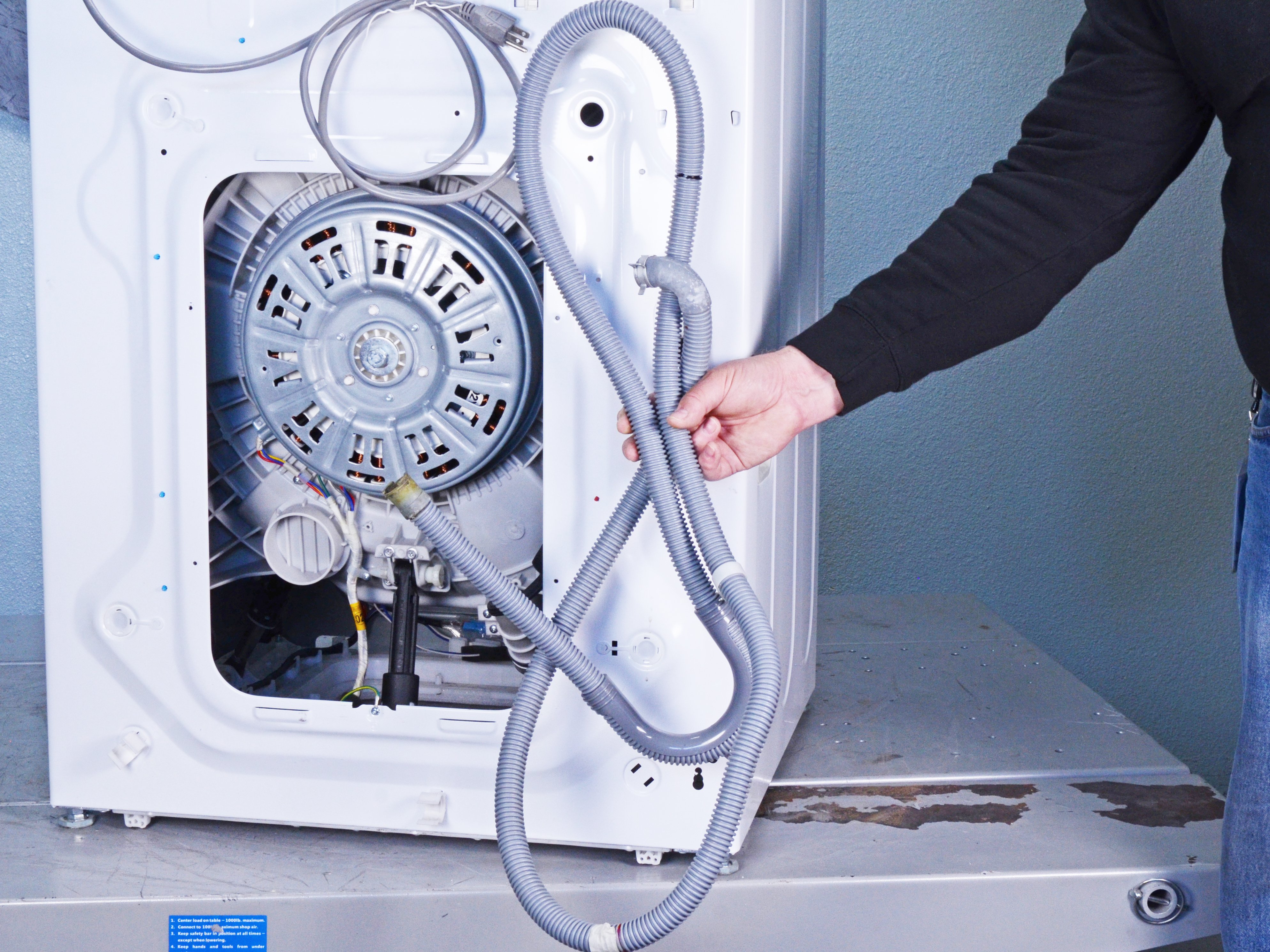
- Check the drain hose: Make sure it is not kinked, crushed, frozen, or shoved too far down the standpipe (that can cause siphoning or slow drain issues).
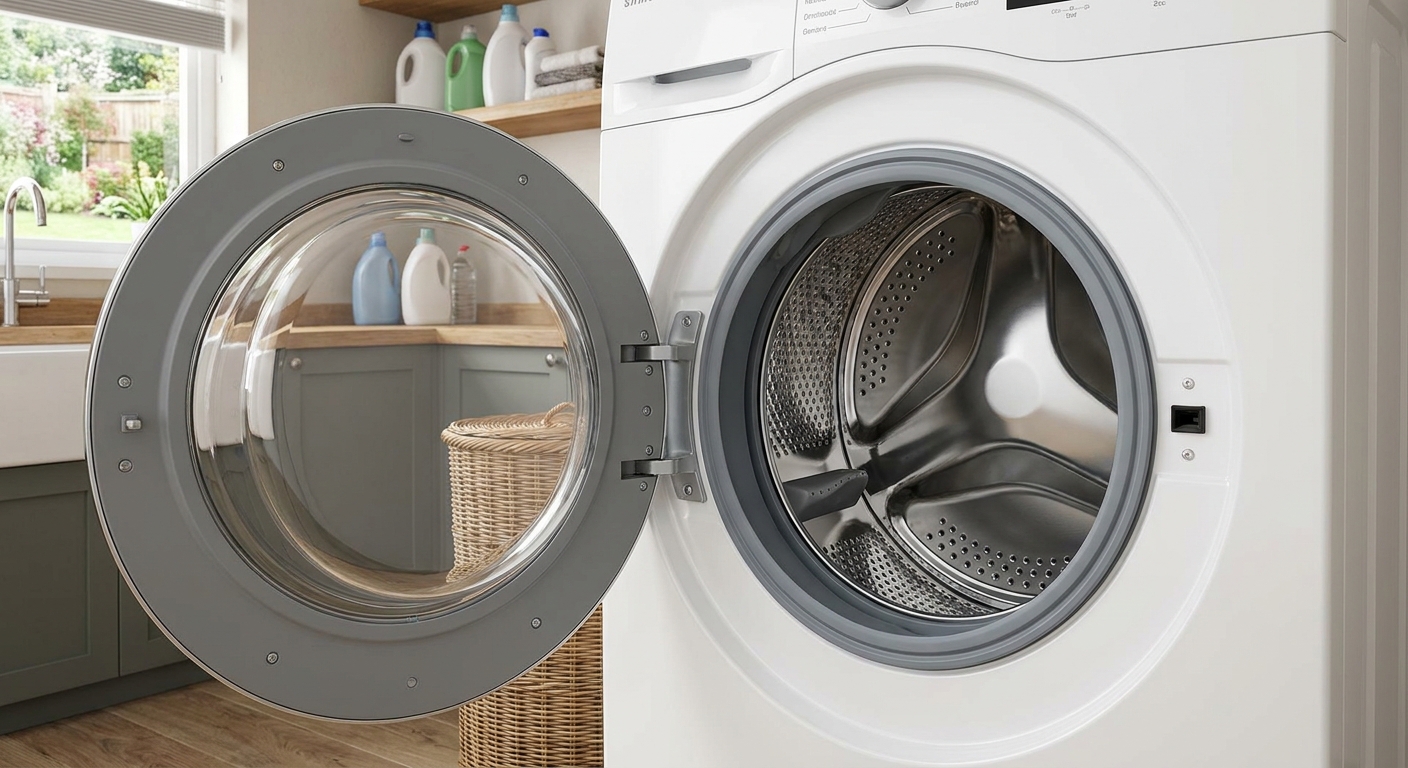
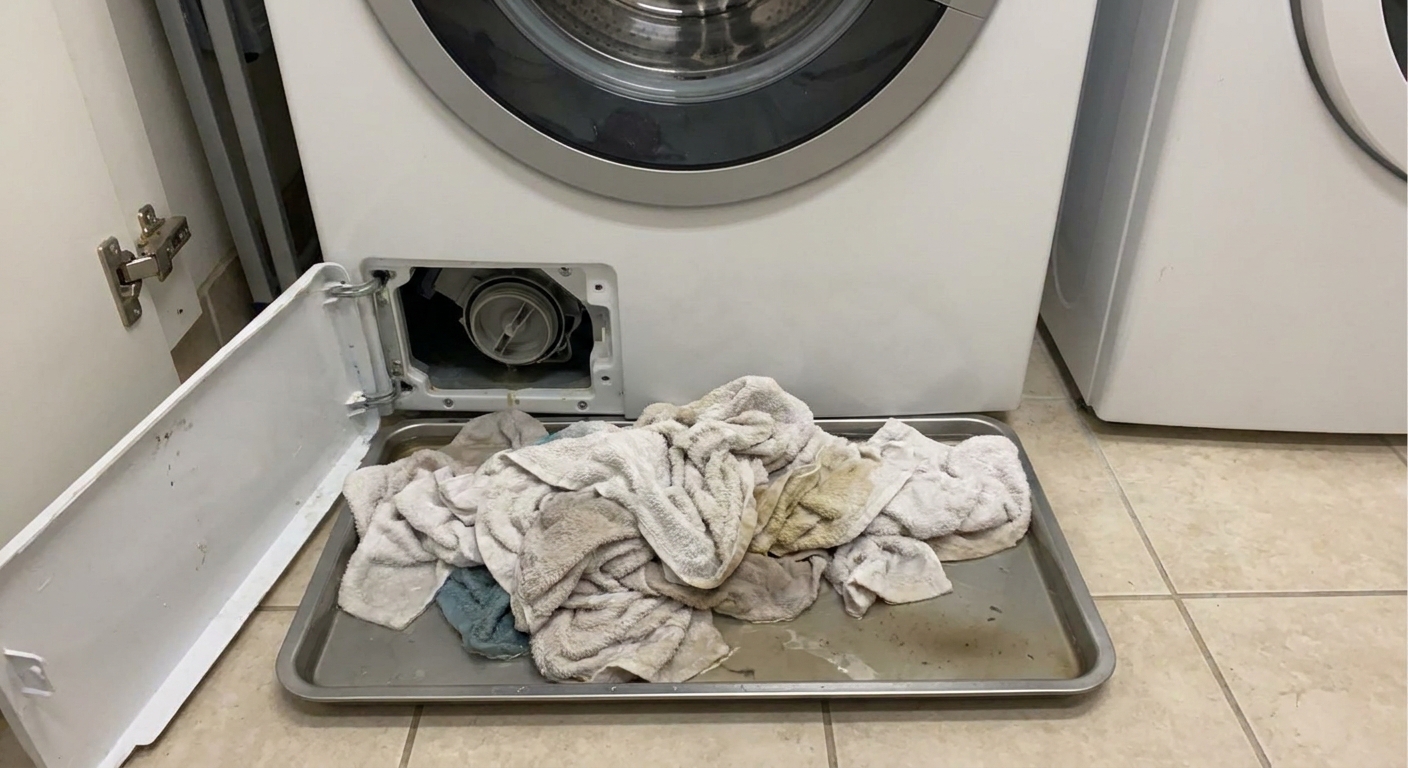
- Front-load filter and coin trap: Many front-loaders have a small access door at the lower front with a clean-out filter. Clean it out and be ready with towels and a shallow pan. Some models also have an emergency drain hose.
- Top-load pump inlet: Socks and small items can get into the pump or the tub-to-pump hose. If it drains slowly or you hear a pump hum with poor flow, an obstruction is common.
If you clean a filter, remove a blockage, or fix a hose kink and the washer spins normally after that, you just saved yourself a parts order.
Step 3: Check the lid switch or lid lock
Top-loaders typically use a lid switch. Many newer top-load and most front-load models use a lid lock or door lock. Either way, the washer needs proof the lid or door is closed before it will spin at high speed. This is one of the most common reasons a washer will agitate but refuse to spin.
Quick signs it is a lid switch or lock issue
- The washer agitates but will not spin, and you do not hear the usual click of the lid switch engaging.
- The lid closes but feels “mushy,” cracked, or loose at the strike point.
- The machine stops at spin and beeps, flashes lights, or shows a door or lid error.
- You can sometimes get it to spin by pressing down on the lid near the switch area (temporary clue, not a fix).
Inspect the lid strike and switch area
Unplug the washer. Open the lid and look for:
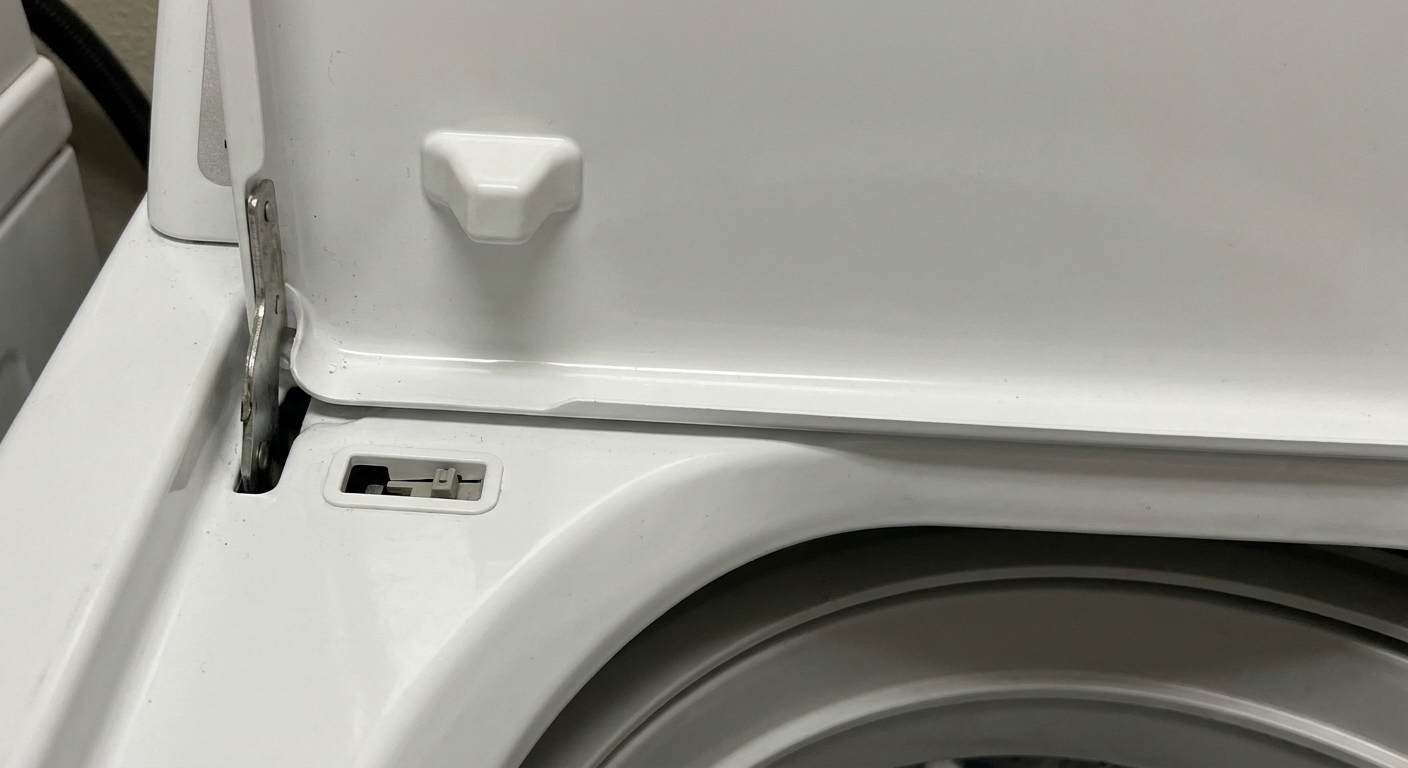
- Broken lid strike: This is the little plastic tab on the lid that pushes the switch. If it is cracked or missing, the washer may never “see” the lid as closed.
- Loose switch mounting: If the switch is knocked out of position, the lid might not contact it.
- Door boot interference (front-load): Sometimes a sock or debris prevents the door from closing fully.
Basic functional checks
- Top-load lid switch: With the washer unplugged, you can often hear a distinct click when the lid closes. No click can indicate a bad switch or strike.
- Door lock: During the start of a spin cycle, you normally hear the lock engage. If the lock never engages, the control may refuse to spin.
Is this an ordinary part swap?
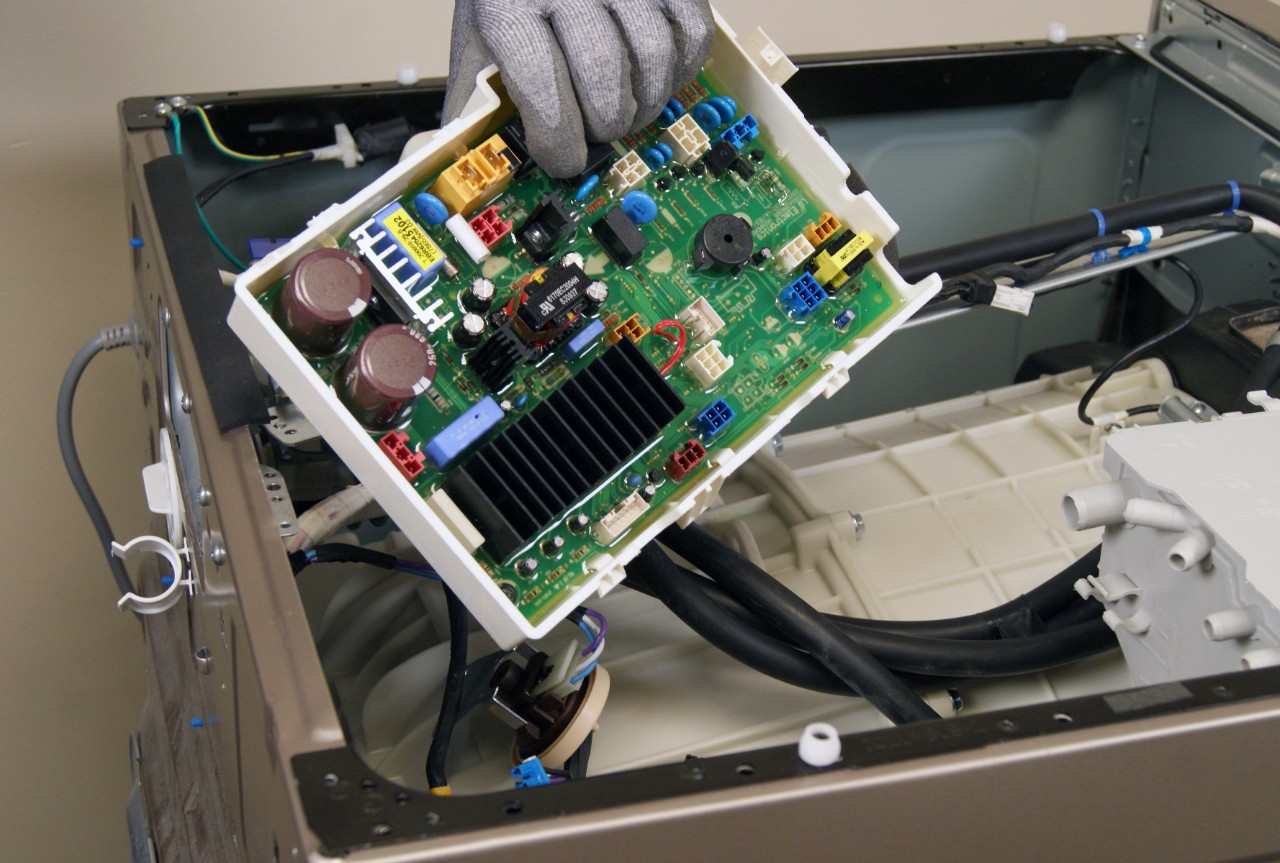
Most of the time, yes. Lid switches, lid strikes, and door locks are common DIY replacements with basic tools. The exact access depends on the brand and model, but you are generally removing a console panel, top panel, or the front lower access panel to reach the lock wiring.
Tip from my contractor days: Take a quick photo of the wiring connectors before unplugging anything. It saves a lot of second guessing during reassembly.
Step 4: Inspect the drive belt or motor coupling
If the lid switch or lock checks out and it drains, the next place I look is the mechanical connection between the motor and the transmission or drum. Different washers do this differently:
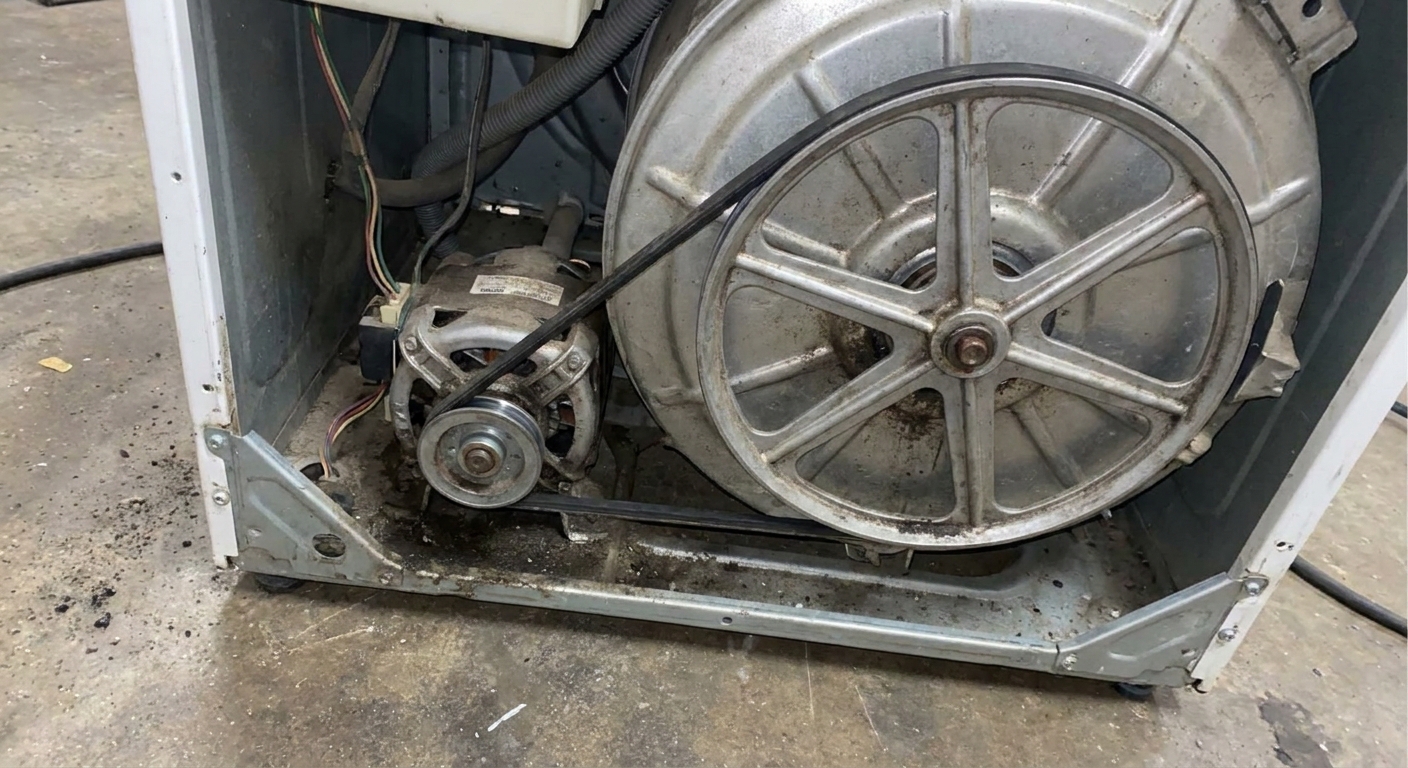
- Belt-driven washers: A rubber belt connects the motor to the transmission pulley or drum pulley.
- Some older direct-drive top-loaders: A motor coupling connects the motor to the transmission. It is designed to fail first if the washer jams, kind of like a mechanical fuse.
How to check a drive belt
Unplug the washer. Access is usually from the back panel or by tipping the washer back (depending on design). Look for:
- Belt off the pulley or shredded.
- Glazed, cracked belt that slips under load.
- Loose belt: Some models use an idler pulley or tensioner that can fail.
If the belt is damaged, replace it. That is a straightforward part swap for most homeowners. Just be sure you route the belt correctly and keep fingers clear while seating it on the pulleys.
How to check a motor coupling (older direct-drive top-load)
If you have a direct-drive style washer, a failed coupling can let the washer agitate but not spin, or it may do neither depending on how it broke.
Common clues:
- Grinding bits under the washer (small plastic or rubber pieces).
- Motor runs but tub does not spin, and you may smell hot rubber.
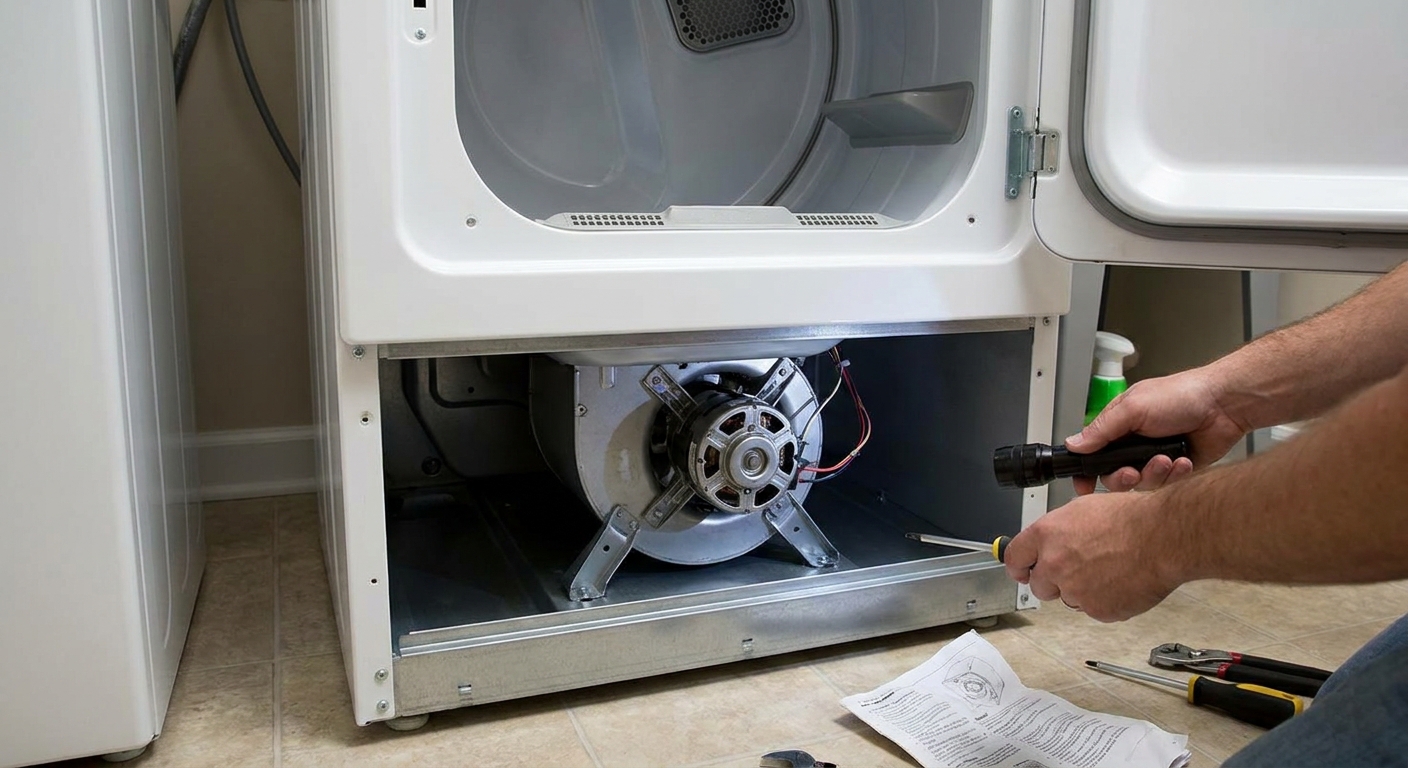
Replacing a motor coupling is still a DIY-friendly job, but it is more involved than a belt. You will usually remove the cabinet, pump, and motor to access the coupling. If you are comfortable taking pictures as you go and keeping bolts organized, it is very doable.
Safety note: The cabinet edges and internal brackets can be sharp. Gloves are not a bad idea.
Step 5: Check clutch and other spin-drive parts
If the washer technically “spins,” but it is lazy about it and never really ramps up, you are usually looking at a slipping drive component. On some top-load platforms, that is a worn clutch. On other designs, it can be a drive hub, splines, or a shift mechanism that is not fully engaging. Not every washer has a traditional, serviceable clutch, so treat this step as “check the platform-specific spin hardware.”
Signs of a slipping clutch-type problem
- Washer drains but leaves clothes very wet because spin speed is low.
- You notice dark dust residue near the drive area (from friction materials) or a faint burning smell.
- Spin improves a little with very small loads, but fails with normal loads.
Other common culprits on modern top-loaders
- Shift actuator or mode shifter: If the machine cannot shift into spin mode, it may agitate and drain but never truly spin.
- Drive hub or worn splines: The motor may spin the drive system, but the basket does not grab, especially under load.
DIY level varies here. Some repairs are simple. Others require dropping the transmission or drive assembly. If you get underneath and see oil leakage from a gearcase or transmission area, that is a sign you may be moving beyond simple wear parts.
Error codes and suds
If your washer displays an error code or a blinking light pattern, look it up by your exact model number. Many codes point straight to lid lock, drain, oversudsing, or imbalance issues.
Also worth mentioning for front-loaders and HE top-loaders: too much detergent can create oversuds, and some machines will refuse to ramp into a high-speed spin until the suds calm down. If you see a lot of foam and the cycle seems to stall at spin, run an extra rinse and cut back on detergent next time.
When to stop
I love a good DIY fix, but there is a point where the smart move is to stop and call a technician, especially if you are seeing symptoms that suggest a motor issue, a locked-up gearcase, or an electrical problem.
Stop and call for service if you notice any of the following
- Loud humming with no movement during spin, especially if it quickly smells hot.
- Breaker trips or the washer shuts down repeatedly when it attempts to spin.
- Burnt wiring smell, melted connector, or visible scorch marks.
A quick way to separate motor vs drivetrain (when accessible)
On belt-driven units where you can safely access the belt:
- If you remove the belt and the motor pulley will not turn by hand, that points toward a motor problem.
- If the motor turns freely but the drum, basket, or transmission pulley will not, you may be dealing with a locked basket, seized bearing, or a gearcase problem.
Not every washer makes this easy to access, and a locked basket can mimic a “seized motor” symptom. If you are not 100 percent sure what you are seeing, that is a good time to bring in a pro before something overheats.
Quick troubleshooting order
- Rebalance the load and confirm the washer is level.
- Confirm it drains (hose, filter, pump).
- Lid switch or lid lock (including the lid strike).
- Drive belt (belt-drive models) or motor coupling (some older direct-drive top-loaders).
- Clutch or other spin-drive parts (actuator, hub, splines) if it spins weakly or slips.
- Stop if it overheats, trips breakers, smells burnt, or seems mechanically locked.
FAQ
Why does my washer agitate but not spin?
Common causes include an unbalanced load, failure to drain, a lid switch or door lock that is not proving closed, a slipping or broken belt, a failed motor coupling on some older direct-drive top-loaders, or a spin-drive issue like a clutch, actuator, or worn drive hub depending on the platform.
My washer spins a little, but clothes are still soaked. What is most likely?
First make sure it is draining fully. If it drains but spin speed stays low, a slipping belt, a clutch-type issue, or a drive hub problem is high on the list. Overloading and oversudsing can also keep it from reaching full speed.
Can I bypass the lid switch to test it?
I do not recommend bypassing safety switches. It is risky around a spinning tub and can create a real injury hazard. A better approach is inspecting the strike, checking for the click, and testing the switch for continuity with a multimeter if you are comfortable doing that.
How do I make sure I buy the right part?
Use your washer’s model number from the sticker (often under the lid, on the door frame, or behind the control panel). Then match the part to that exact model. For common parts like belts, lid switches, actuators, and couplings, small design differences matter.