If your washing machine won’t drain, it usually isn’t “mysterious.” Most often it’s a clog, a kink, a stuck pump, or a safety switch doing its job a little too well.
The trick is to troubleshoot in the right order so you don’t pull the whole machine apart when the real issue is a sock in the hose. Below is my contractor-to-DIY checklist. Start with the easy external checks, then work your way inward.
Before you start: safety and quick setup
- Unplug the washer. If you must test a cycle later, plug it in only for that step.
- Turn off water supply valves if you will be moving the machine around a lot.
- Expect water. Keep a shallow pan, a few towels, and a small bucket nearby.
- Watch for sharp edges. Access panels can be razor-ish. Gloves help.
- Know your type: front-loaders usually have a drain pump filter or coin trap; many top-loaders do not. Some brands hide it behind a panel or along the bottom.
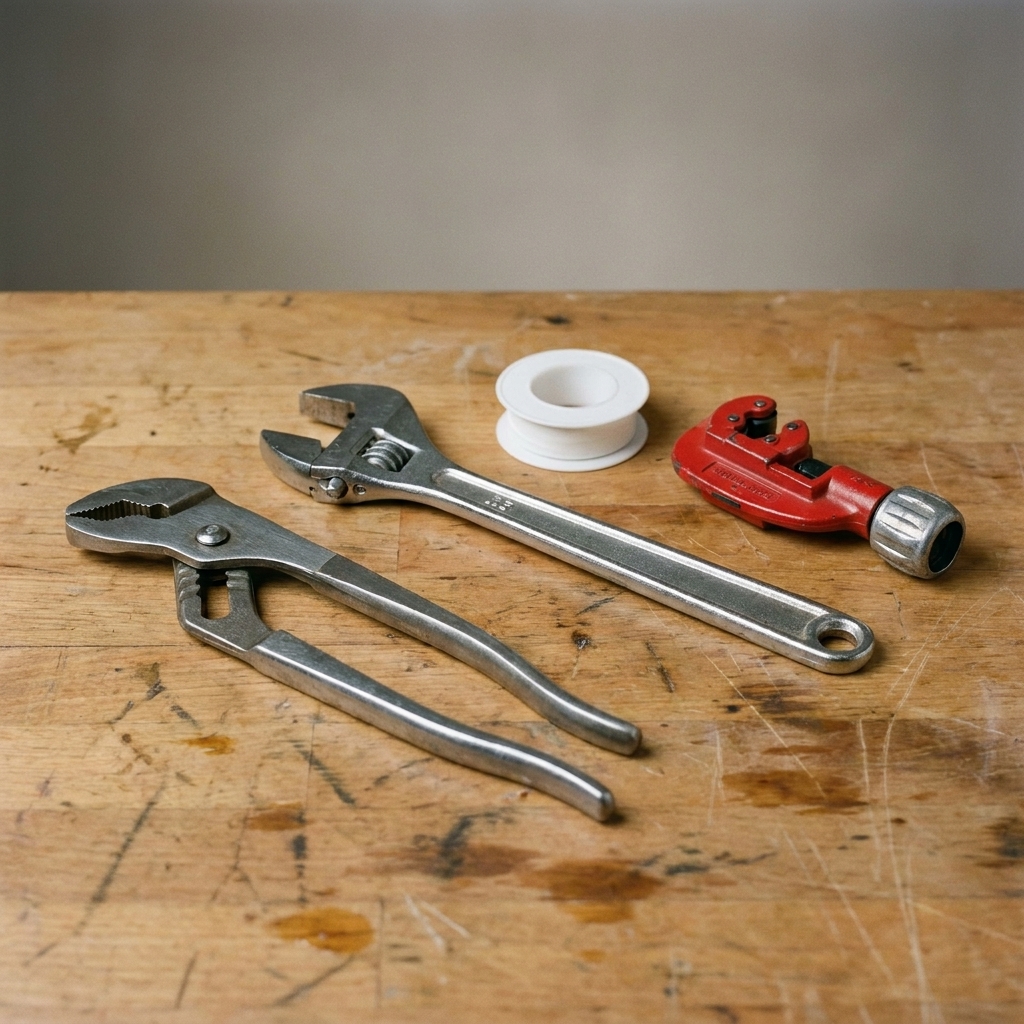
Tools that help: slip-joint pliers, Phillips screwdriver, flashlight, wet/dry vac (optional but fantastic), a small brush, and a zip tie or pipe cleaner for gunk. If you remove any connectors, take a quick phone photo first so everything goes back where it came from.
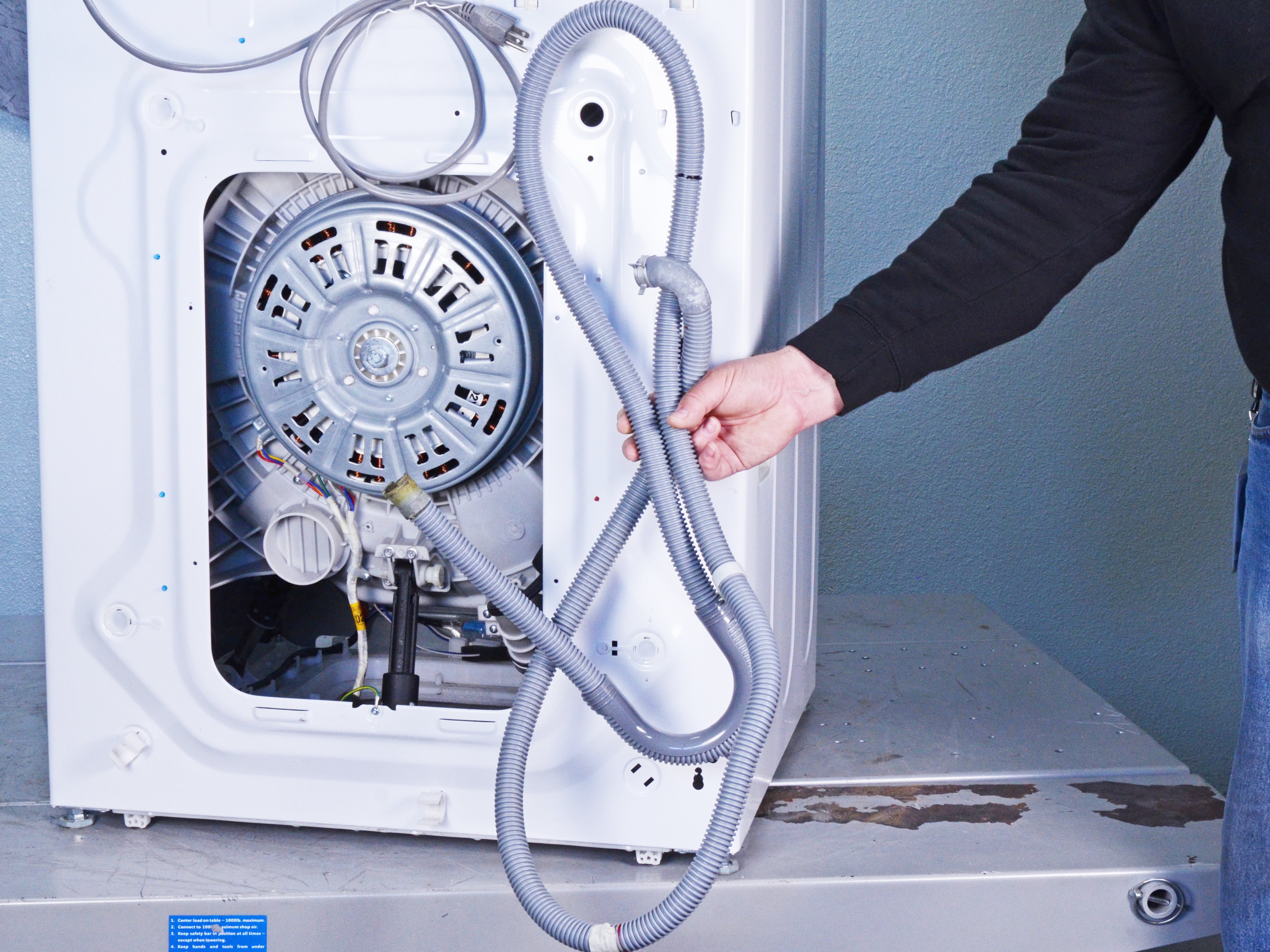
1) The drain hose is kinked, pinched, or installed wrong
This is the most common “nothing is broken” reason a washer won’t drain. If the machine is shoved back too tight, the hose gets flattened. Or the hose is pushed too far down into the standpipe, or the standpipe opening is sealed up tight, and the washer can’t vent properly. That can lead to slow draining, siphoning, or repeated drain attempts.
What to look for
- Washer recently moved or installed
- Visible kinks, sharp bends, or a crushed section behind the machine
- Drain hose shoved deep into the standpipe
- Standpipe opening sealed tightly around the hose (no air gap)
How to fix it
- Pull the washer forward and straighten the hose.
- Make sure the hose has a gentle curve, not a hard 90-degree bend.
- Do not seal the standpipe opening airtight. Most installs need an air gap for proper draining.
- Follow your manufacturer’s install specs for standpipe height and hose insertion depth. Too high, too low, or jammed too deep can cause slow drains or siphoning behavior.
- If the hose is damaged or permanently flattened, replace it. They’re inexpensive and it’s not worth fighting a choke point.
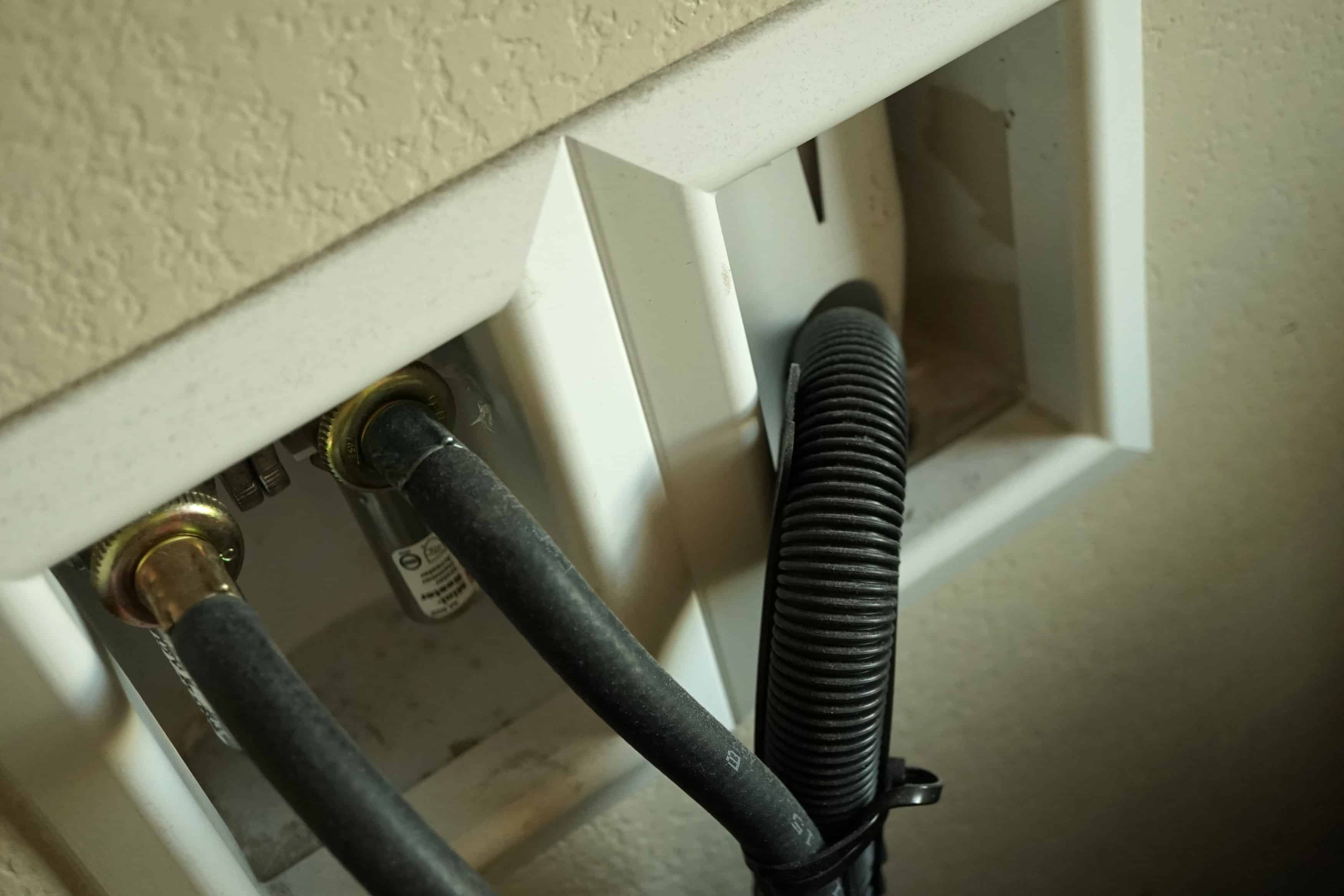
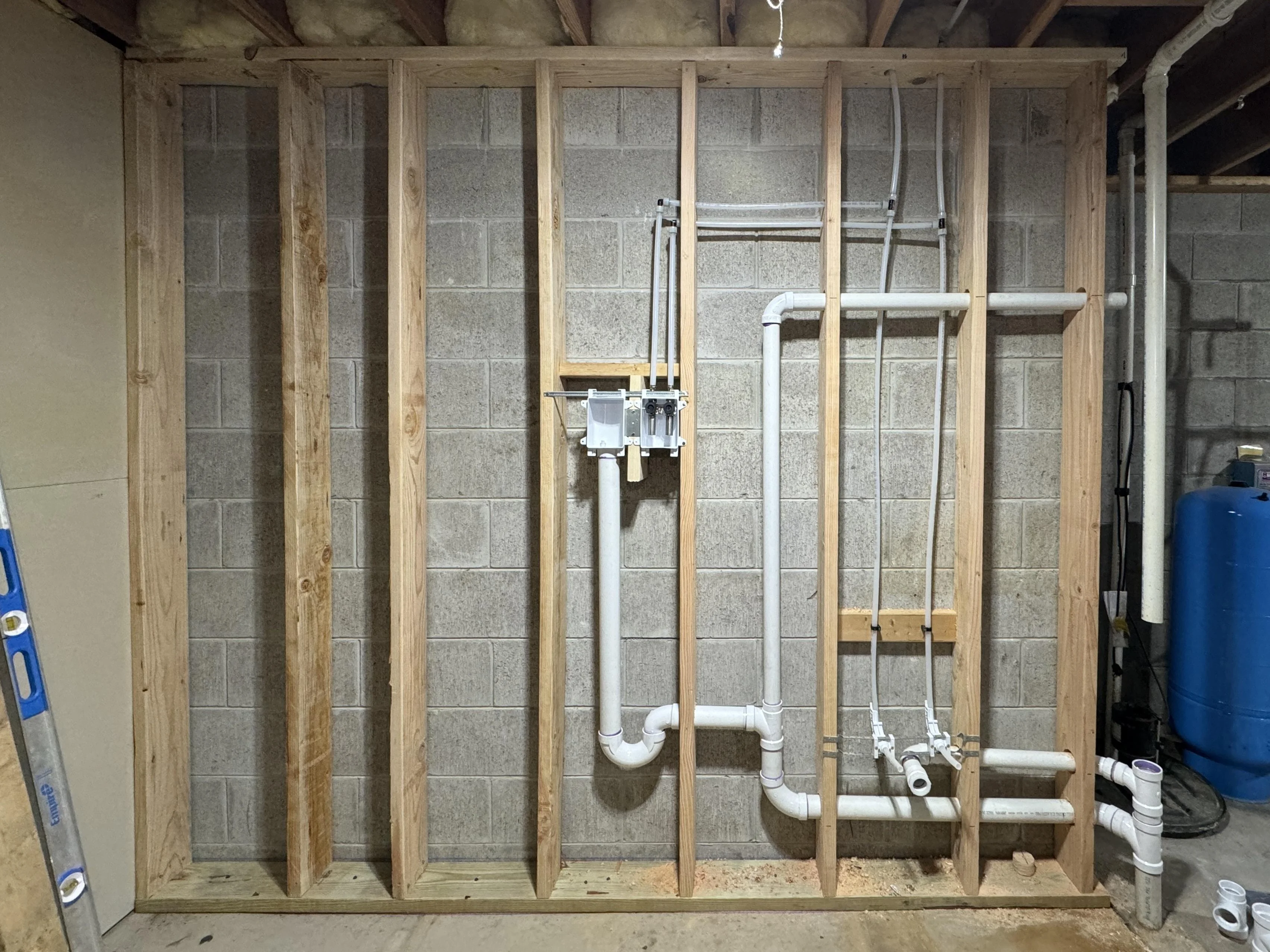
2) The standpipe or sink drain is partially clogged
Sometimes the washer is draining just fine, but the home drain system is the bottleneck. The pump pushes water out, it hits a slow standpipe, and water backs up. Depending on the washer, it may sense poor draining and stop mid-cycle, or you may see water coming up in the laundry sink.
What to look for
- Water backs up in the standpipe or utility sink during drain
- Gurgling noises at the drain
- Washer seems to pump out, but the house drain cannot keep up
How to fix it
- Try a hot water flush down the standpipe or sink only if safe for your plumbing. Do not use boiling water. Stop immediately if water starts rising toward the top.
- Use a drain snake through the standpipe or sink trap to pull lint sludge and small obstructions.
- If you have a wet/dry vac, you can sometimes vacuum the standpipe opening to pull out lint clumps (seal around the nozzle with a towel).
- Avoid mixing drain chemicals or dumping aggressive cleaners down there. They can damage pipes and make the situation more dangerous if you end up opening the line.
Heads-up: If the standpipe overflows or you suspect a main line issue, that is a plumbing problem, not a washer problem.
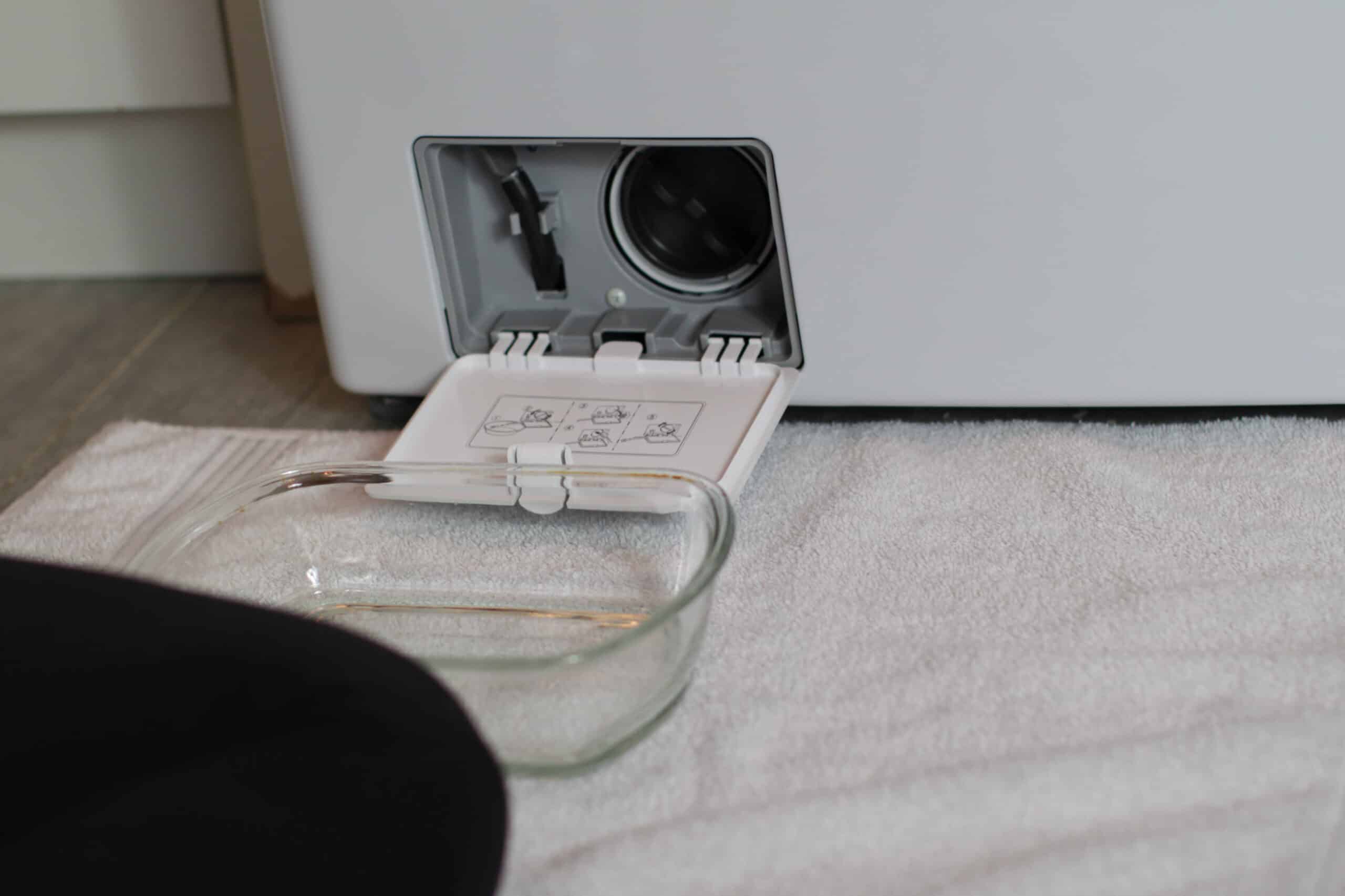
3) The pump filter is clogged (front-loaders and some HE top-loaders)
If I had a dollar for every time I found a hairpin, coin, or toddler sock in a pump filter, I could retire and buy a new washer for fun.
Many front-loaders have an access door near the bottom front where the drain pump filter (often called a coin trap) lives. When it clogs, the washer cannot push water out fast enough and may throw a drain error code. Not all models put it in the same spot, so if you do not see an access door, check your manual for the filter location or whether your machine even has one.
What to look for
- Washer stops with water in the drum
- Drain error code (brand-specific, often things like OE, ND, or F9E1)
- Slow drain, repeated attempts to drain
How to fix it
- Unplug the washer.
- Open the lower access door or panel.
- Place towels and a shallow pan under the filter area.
- If your washer has a small emergency drain hose, pull it out, remove the cap, and drain into a container first.
- Slowly unscrew the pump filter and let remaining water spill into the pan.
- Clean out debris, rinse the filter, and wipe the housing.
- Check the impeller area for obstructions, then reinstall the filter snugly.
Pro tip: If the filter cap is hard to turn, do not force it like you are opening a pickle jar. Wiggle and work it slowly. Stripped plastic is a bad day.
4) An item is stuck in a hose
Even with a clean filter, a washer can refuse to drain if something is lodged in the hoses. The two usual suspects:
- Drain hose (from pump to standpipe)
- Tub-to-pump hose (internal hose from tub outlet to the pump, often larger and more likely to catch socks)
What to look for
- Gurgling or buzzing during drain but little to no water movement
- Repeated drain attempts
- “Clean filter” but still no drain
How to fix it
- Unplug the washer.
- Remove the drain hose from the standpipe and lower it into a bucket. This is a handy diagnostic step, but it may not fully empty the tub on all models if the hose route rises internally.
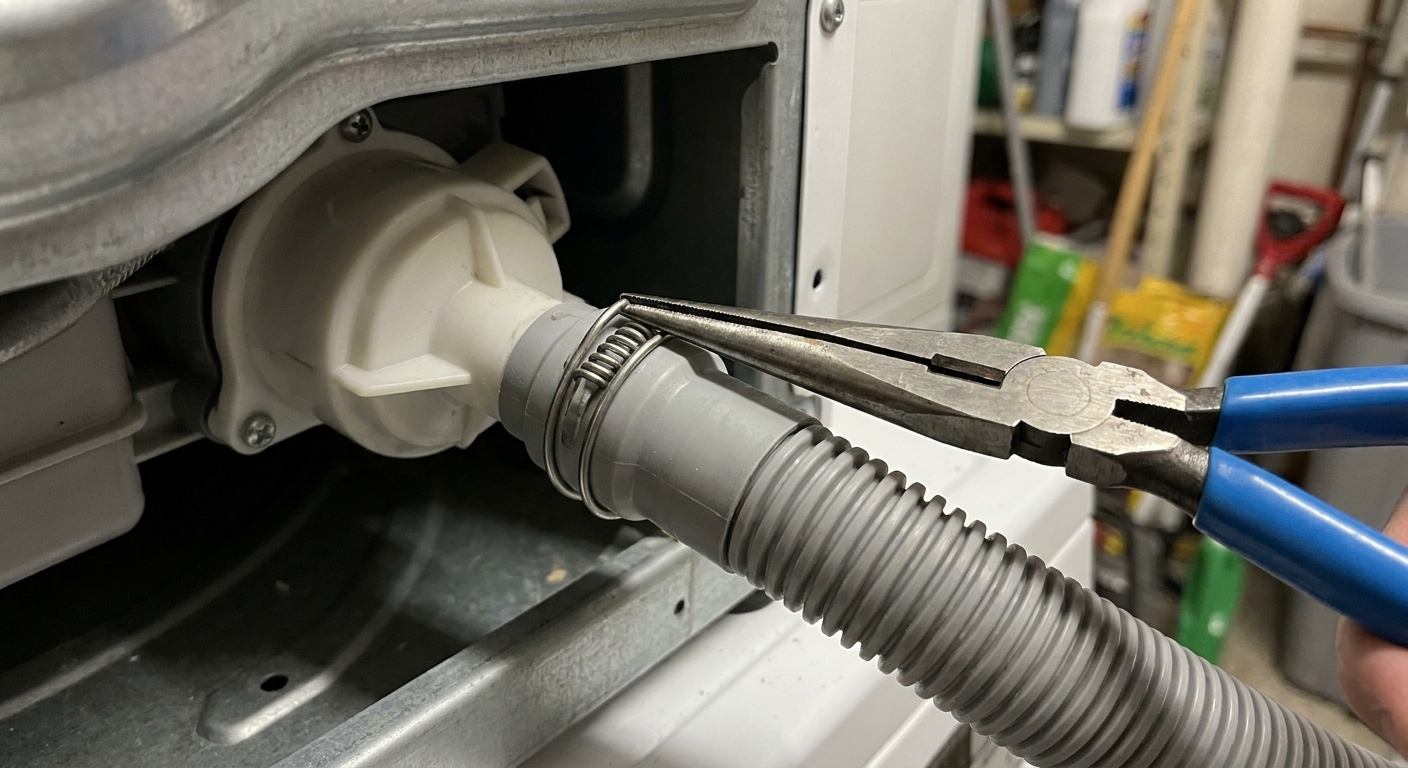
- If water barely trickles out by gravity, the hose is likely blocked. Remove it from the washer end (clamp may require pliers).
- Flush the hose outside with a garden hose, or run a flexible brush through it.
- If you suspect the tub-to-pump hose is blocked, you will typically need to access the pump area (front lower panel on many front-loaders, rear access on some top-loaders). Remove the clamp and inspect for socks, lint mats, and debris.
My learned-the-hard-way note: Keep your face out of the line of fire when you pop a hose clamp. Old washer water is not a cologne.
5) The drain pump is jammed or failing
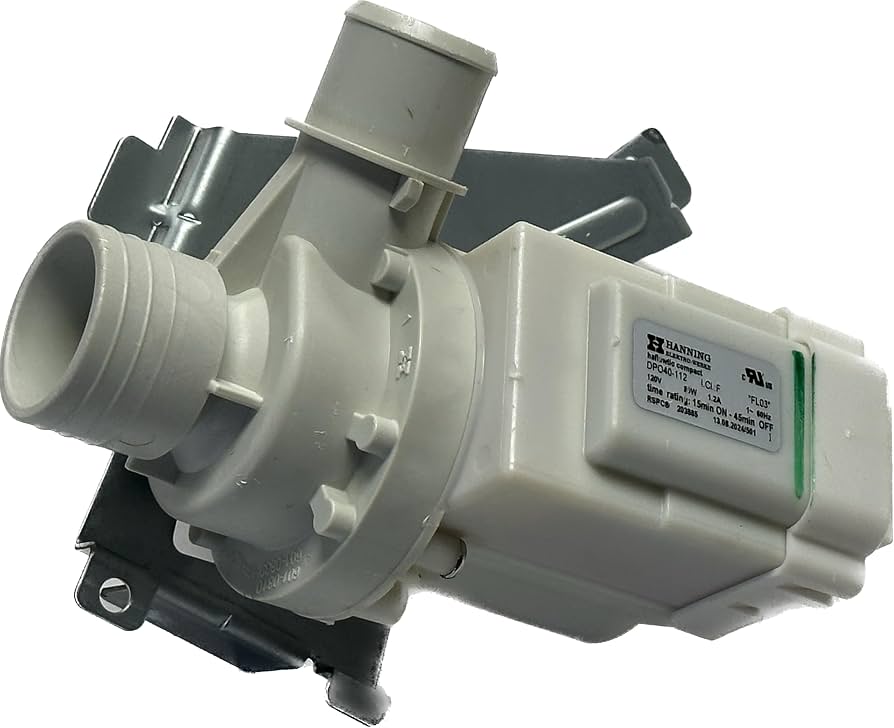
If you hear a humming or buzzing when the washer tries to drain, the pump may be getting power but cannot turn. That can happen from a jam (debris in the impeller) or a failing motor.
A quick nuance: some pumps hum briefly as they start. A short hum that turns into normal pumping is fine. A sustained hum with no water movement is when you start suspecting a jam.
What to look for
- Loud humming or buzzing during drain
- Intermittent draining, works sometimes then stops
- Burnt smell (unplug immediately if you notice this)
How to fix a pump jam
- Unplug the washer.
- Clean the pump filter first (Reason #3).
- With the filter removed, use a flashlight to inspect the impeller area. Gently feel for obstructions with a gloved finger.
- Remove debris carefully. The impeller should spin with light resistance, not feel locked solid.
How to decide if the pump needs replacement
- Impeller is broken, wobbly, or stripped
- Pump motor only hums and will not turn even after clearing debris
- Washer consistently fails to drain and you have ruled out clogs
- Drain issues started as slow draining and got worse (common, but not guaranteed)
Replacing a drain pump is very doable for a careful DIYer, but the steps vary by model. If you share your brand and model number, you can pull the correct pump and access method.
6) Lid switch or door lock issue
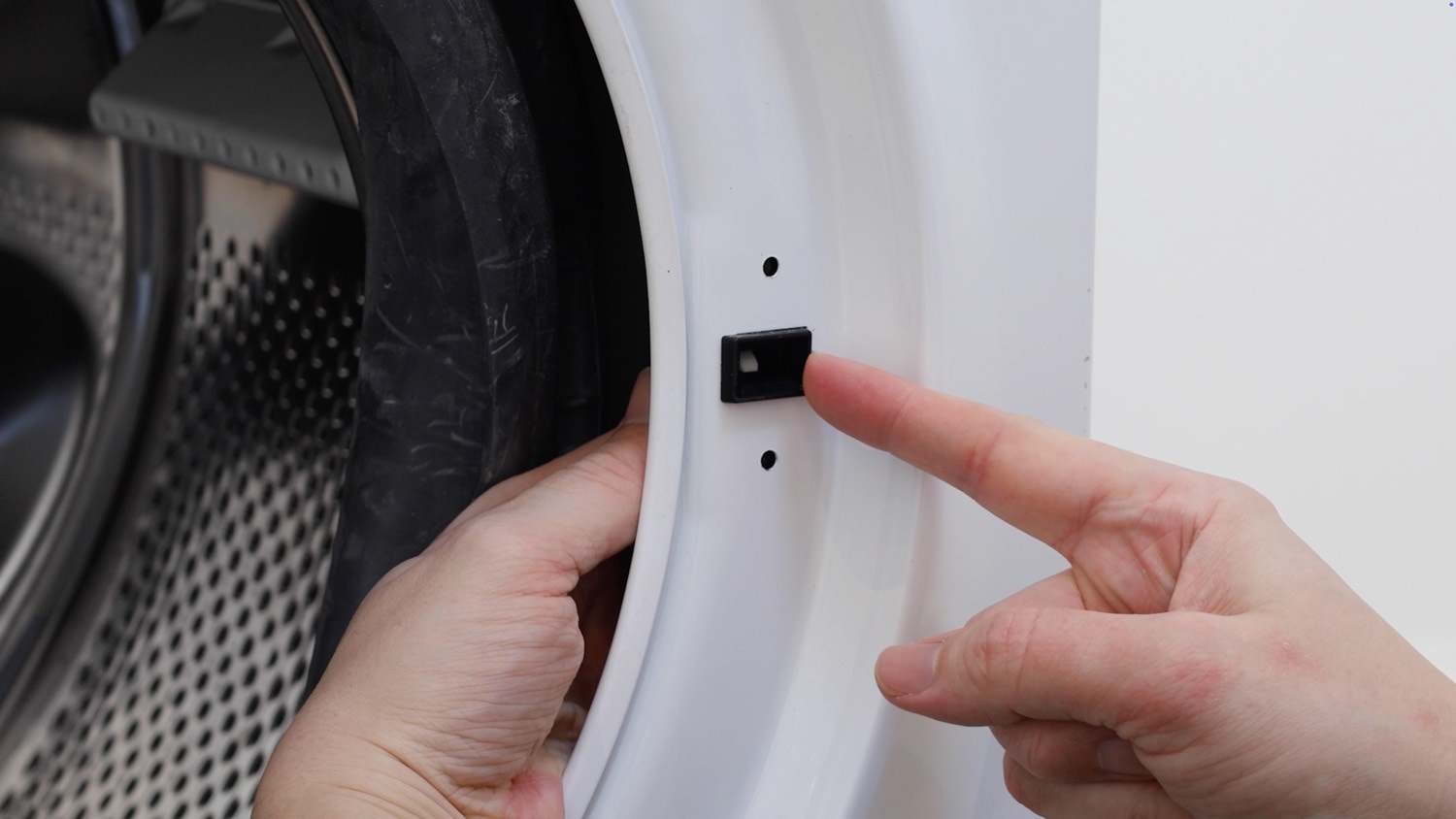
Washers are picky on purpose. If the machine does not detect a properly closed lid (top-load) or a locked door (front-load), it may refuse to spin and sometimes will not complete the drain sequence.
What to look for
- Washer drains partially but will not spin
- Door lock light blinking, or lid not clicking
- Error codes related to lid or door lock (varies by brand)
How to fix it
- Make sure the load is not forcing the door or lid out of alignment.
- Check for simple obstructions like a sock caught at the door boot (front-load).
- Inspect the latch area for detergent buildup, then clean gently.
- If the latch mechanism is cracked or the strike is broken, replace the damaged part.
Safety note: Avoid bypassing lid switches. Those are there to keep hands safe when the drum is moving.
7) Sensor, wiring, or control problem
If you have confirmed the drain path is clear, the filter is clean, the hoses are open, and the pump is not jammed, then you are into the less common (but real) causes: loose wiring to the pump, a failing control board, or a sensor issue that prevents the washer from completing a drain command.
Depending on the model, that sensor can be a pressure switch or water level sensor that tells the machine whether it thinks water is still in the tub. If the washer thinks it is full when it is not, it can get weird about draining and spinning.
What to look for
- No pump sound at all during the drain portion
- Random stops mid-cycle even with a light load
- Error codes that return immediately after you clear clogs (codes vary widely by brand)
What you can do as a homeowner
- Reset the washer: unplug for 2 to 5 minutes, then try a Drain/Spin cycle.
- Check the outlet: a loose plug or tripped GFCI can cause odd behavior.
- Inspect visible wiring at the pump connector if you can access it safely. Look for a loose plug, damaged wire, or corrosion. Take a photo before disconnecting anything.
If you are comfortable with a multimeter, you can test for voltage at the pump during a drain command and test pump resistance, but at this point many homeowners choose service. Control board diagnosis can turn into parts darts fast if you do not confirm the failure.
Fix order checklist
- Look for a kinked or pinched drain hose.
- Confirm the standpipe or sink drain is not backing up.
- Confirm standpipe height and hose insertion depth match manufacturer specs (and do not seal the opening).
- Clean the pump filter or coin trap (front-loaders especially).
- Check drain hose and tub-to-pump hose for clogs.
- Listen for pump hum, clear impeller jams.
- Verify door lock or lid switch is engaging.
- Reset and consider sensor, wiring, or control issues.
When to call a pro
- You see water leaking underneath during drain (could be a pump housing, hose, or seal).
- The washer trips breakers or you smell electrical burning.
- You suspect a house drain problem affecting multiple fixtures.
- You have cleared clogs and the pump still will not run, and you do not want to do electrical testing.
- The drain line is frozen or the washer is in an unheated space and you suspect an ice blockage.
FAQ
How do I get water out of a washer that won’t drain?
Unplug it first. On many front-loaders, use the small emergency drain hose behind the lower access door and drain into a shallow pan. If there is no emergency hose, you can slowly crack open the pump filter to let water out in a controlled way, towels ready. As a last resort, disconnect the drain hose and lower it into a bucket.
Can a washer be too full to drain?
Overloading can contribute indirectly. A stuffed drum can prevent proper spinning and confuse water level sensing, and small items can get pushed into places they should not. But even a full washer should still be able to drain unless there is a blockage, installation issue, or pump problem.
Why does my washer drain slowly but eventually finishes?
Slow draining is often a partially clogged pump filter, lint buildup in the hoses, or a standpipe that is starting to clog. It can also be an early sign of pump trouble, but some pumps fail suddenly with no warning.
Do all washing machines have a drain pump filter?
No. Most front-loaders do. Many top-loaders rely on different filtration methods and do not have a homeowner-accessible pump filter door. If you cannot find one, your manual will usually confirm whether your model has a filter or coin trap and where it is.