A gas burner that clicks but won’t ignite is one of those kitchen problems that sounds dramatic but is often simple. The clicking is the igniter doing its job. It is trying to make a spark. Most of the time, the flame fails to catch because the spark is landing in the wrong place, moisture or grime is stealing the spark, burner ports are clogged, or the burner cap is slightly out of position.
I used to get calls for this exact issue when I was contracting, and I would show up, wipe a little gunk off the igniter, reseat the cap, and suddenly I looked like a wizard. You can do the same thing at home, safely, with a few basic checks.
Quick orientation: on most ranges, the burner cap sits on top of the burner head. The head is the part with the tiny holes (ports) that the gas comes out of.
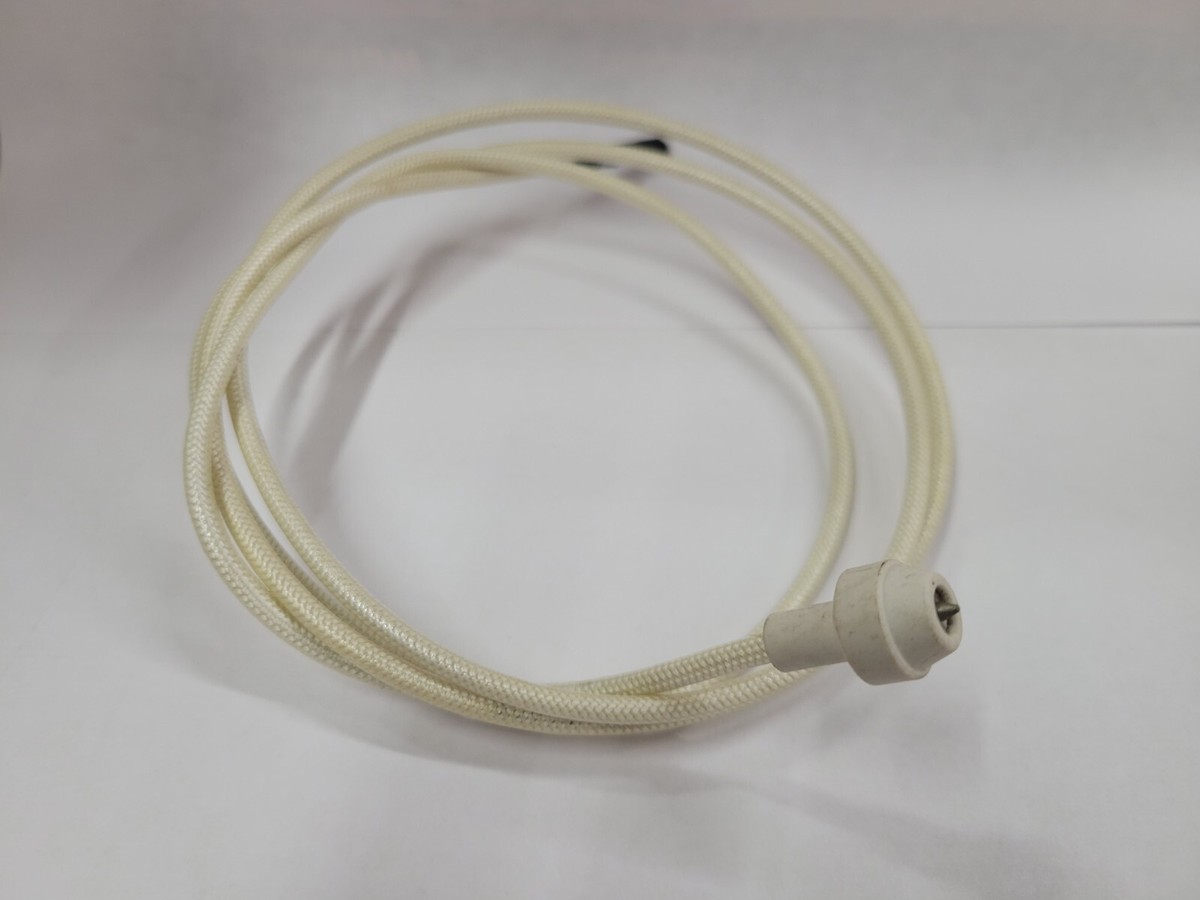
Safety first
- If you smell gas: turn all knobs to OFF, open a window, and do not use matches, lighters, or electrical switches. If the smell is strong or persistent, shut off the gas supply valve to the range (usually behind the stove) and call your gas utility or a licensed technician.
- Let the stove cool completely before cleaning or removing parts.
- Unplug the range (or switch off the circuit breaker) before cleaning around igniters. If a switch is wet or stuck, the stove can spark unexpectedly.
- Do not enlarge burner ports with nails or drill bits. You can damage the burner and change the flame pattern.
- Standing pilot note: most modern ranges use electronic spark ignition. If you have an older unit with a standing pilot, your troubleshooting steps can be different.
What the clicking means
The clicking is the spark ignition system firing. On most gas ranges, turning a burner knob sends power to a spark module, which fires sparks at one or more burners.
If you hear clicking but get no flame, you usually have one of these situations:
- Not enough gas reaching the burner (cap misaligned, ports clogged, valve not fully open).
- Spark is weak or landing in the wrong spot (dirty igniter tip, cracked ceramic, poor grounding path, moisture).
- It lights late or not at all (clogged ports, mis-seated cap/head, weak spark, drafts).
- Controls are misbehaving (wet or dirty ignition switches, failing spark module).
Spark gap basics: the spark should jump from the electrode tip to a nearby grounded metal point on the burner head. Grease, food residue, or corrosion in that path can make the spark jump somewhere else.
Fast checks
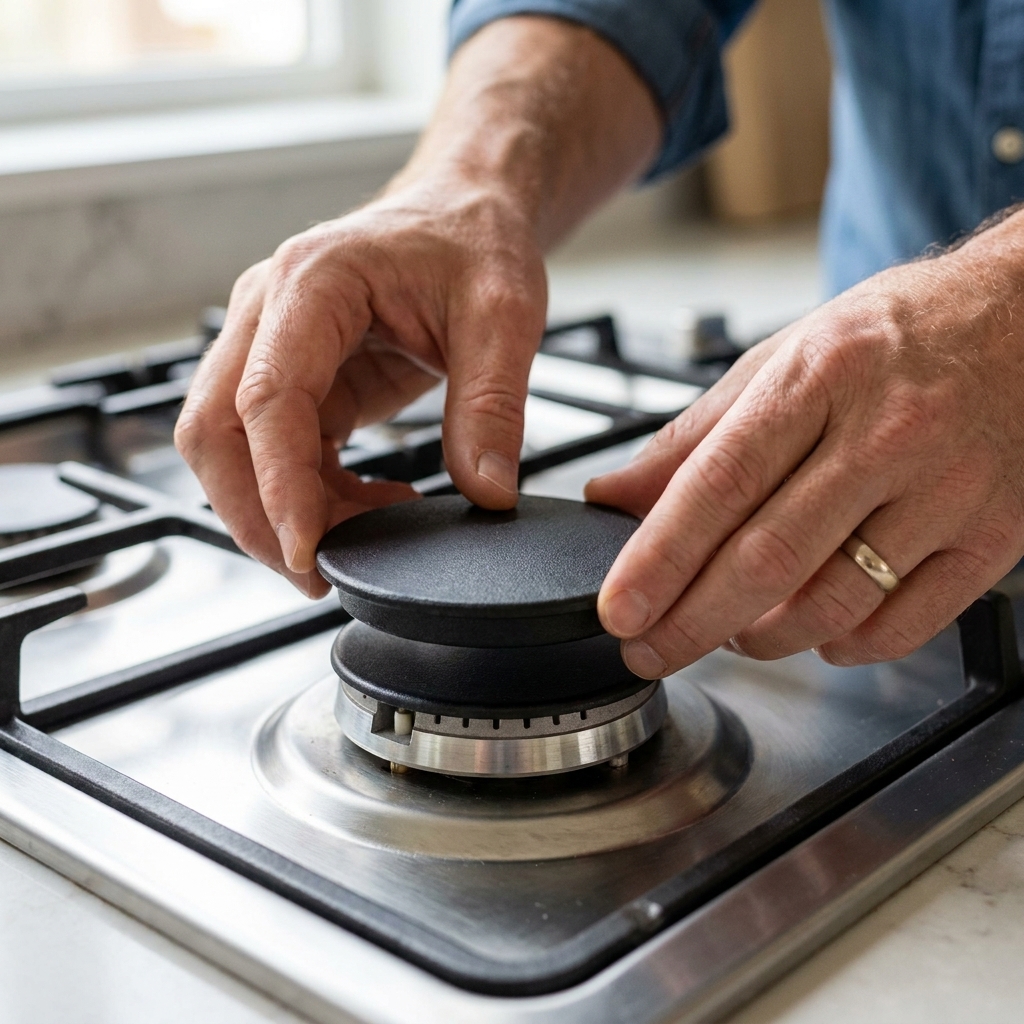
1) Reseat the burner cap
This is the number one fix in my experience. A cap that is rotated, cocked, or sitting on debris can prevent gas from flowing where it needs to, or it can move the flame away from the spark.
- Confirm the burner knob is OFF.
- Lift off the grate.
- Lift the burner cap and burner head (on many stoves the head is separate, on some it is integrated).
- Wipe away crumbs or cooked-on gunk underneath.
- Re-seat the burner head so it sits flat, then place the cap on top so it is centered and level.
2) Test with a long lighter
You do not need electricity to confirm gas flow. A long-reach grill lighter can tell you whether gas is getting to the burner, but treat this step with respect.
- Use a long-reach grill lighter and keep your face, hair, and sleeves back.
- Light the lighter first, then bring the flame to the burner edge where the ports are.
- Turn the knob to LITE.
- If it does not ignite within 1 to 2 seconds, turn the knob OFF and wait a minute for any gas to dissipate before trying again.
- If it lights with a lighter, your issue is almost always igniter cleanliness, igniter position, or spark strength.
- If it does not light even with a lighter, suspect a gas supply or clog issue (or the gas supply is off).
Important: If you smell gas at any point, stop, turn the knob OFF, and ventilate the room.
Clean and dry the burner
Boil-overs and wipe-downs leave behind a perfect recipe for ignition problems: grease, sugar, soap residue, and moisture. Any of those can steal the spark before it jumps the gap.
What you need
- Old toothbrush or small nylon brush
- Cotton swabs
- Paper towels or microfiber cloth
- Warm soapy water
- Optional: rubbing alcohol (helps remove grease and speeds drying)
- Optional: compressed air (helpful for burner ports)
Steps
- Unplug the range (or shut off the breaker).
- Remove grates, burner caps, and burner heads.
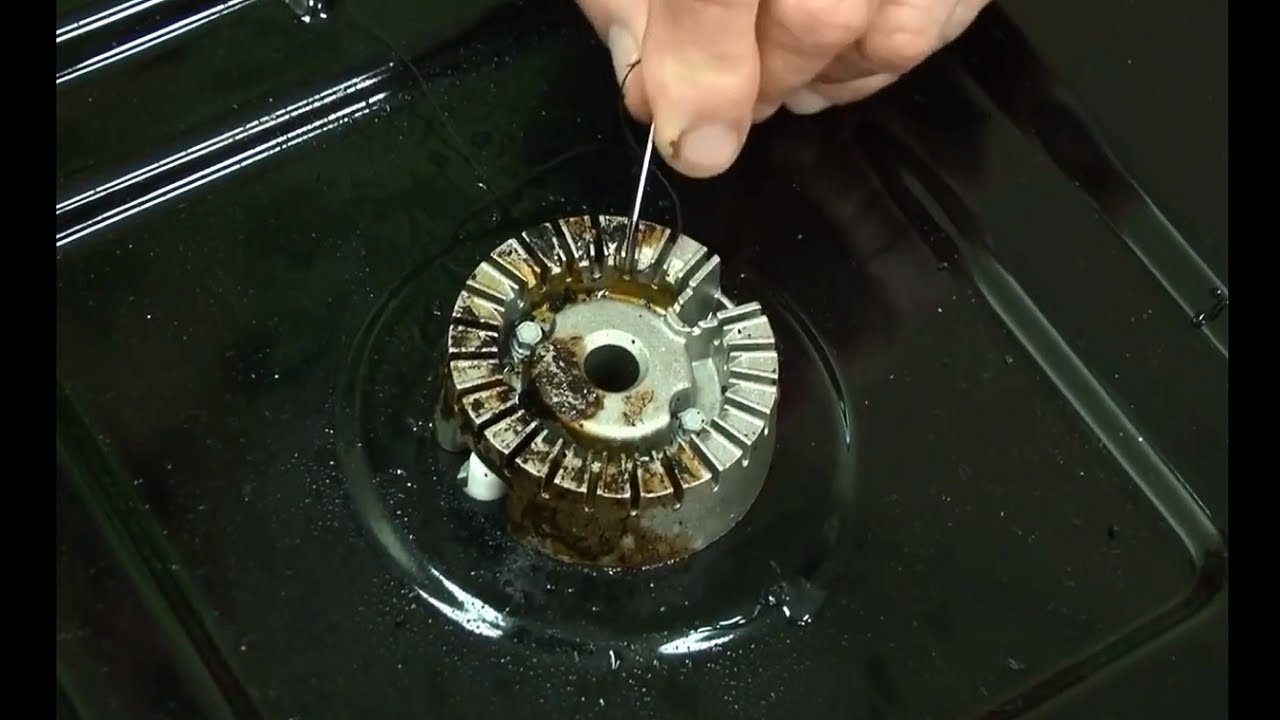
- Clean the burner cap and head in warm soapy water. Scrub the underside and the ring of ports gently with a toothbrush.
- Clean the igniter tip: use a dry toothbrush first. If it is greasy, dampen a cotton swab with rubbing alcohol and wipe the metal tip and surrounding area.
- Dry everything completely. Let parts air dry, and pat them dry with a towel. If you have compressed air, give the burner head a few short bursts to push water out of ports.
- Reassemble: burner head flat, cap centered, grate back on.
- Plug the range back in and test.
If it still clicks but will not light
Move to the next checks: burner port clogs and igniter condition or alignment.
Clear clogged burner ports
Those tiny holes around the burner head are the gas ports. Grease and food can block them, which weakens the gas flow near the igniter. Result: clicking, maybe a whiff of gas, but no ignition.
- Remove the burner head.
- Soak it in warm soapy water (10 to 20 minutes if it is really crusty).
- Scrub around the ports with a nylon brush.
- Use compressed air to clear stubborn ports.
- Rinse and dry completely.
Avoid: toothpicks can break off inside ports, and metal tools can change the port size. If a port will not clear, replacement burner heads are usually affordable.
Check the igniter
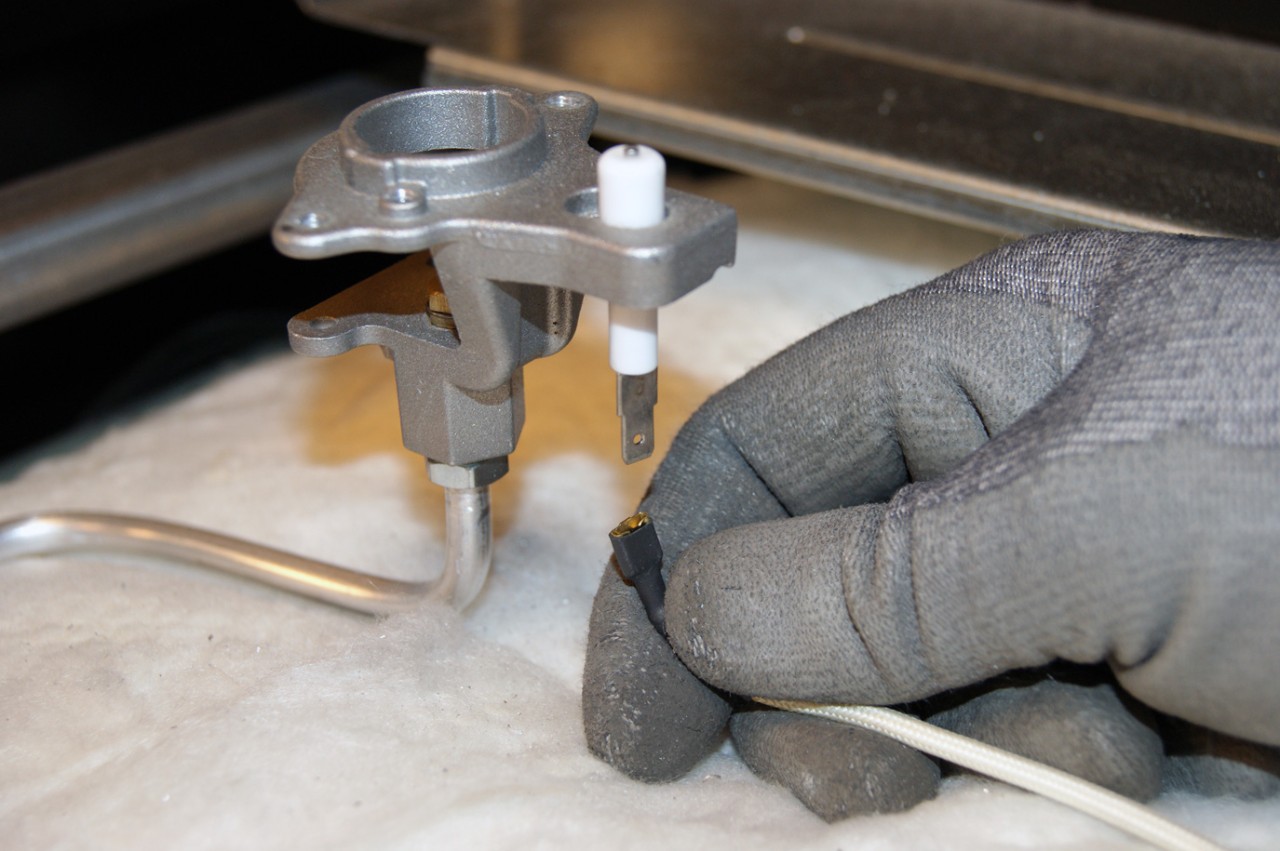
The spark needs to jump from the igniter tip to metal at the right distance. If the igniter is cracked, loose, or dirty, the spark may be jumping somewhere else you cannot see.
What to look for
- Cracked white ceramic on the igniter electrode. Cracks often cause weak spark or arcing to the wrong spot.
- Loose igniter that wiggles when you touch it gently.
- Spark location: with the lights dimmed, you should see a crisp blue-white spark jumping to the burner metal near the electrode.
Realignment tip
Many igniters are fixed in place, but some have a little adjustment at their mounting screws. If the electrode looks obviously far from the burner metal, unplug the range and snug the mounting screws. If the electrode is bent or the ceramic is damaged, replace it rather than forcing it and cracking it further.
Watch for delayed ignition
If a burner clicks, then lights late with a whoosh, do not ignore it. Delayed ignition is usually caused by a mis-seated cap or head, partially clogged ports, or a weak or misplaced spark. Turn the burner off and fix the underlying issue before using it again.
Clicking that will not stop
If your stove is clicking constantly (even when burners are off), the ignition switches behind the knobs are often wet or greasy. This can happen after cleaning the cooktop with too much spray or after a boil-over.
- Turn all knobs OFF.
- Unplug the range (or switch off breaker).
- Pull the burner knobs straight off.
- Use a barely damp cloth with a little dish soap to wipe the stem area, then wipe again with clean water.
- Dry thoroughly. Let it sit 30 to 60 minutes before restoring power.
If the clicking continues after everything is dry, the switch harness or spark module may be failing.
Spark module issues
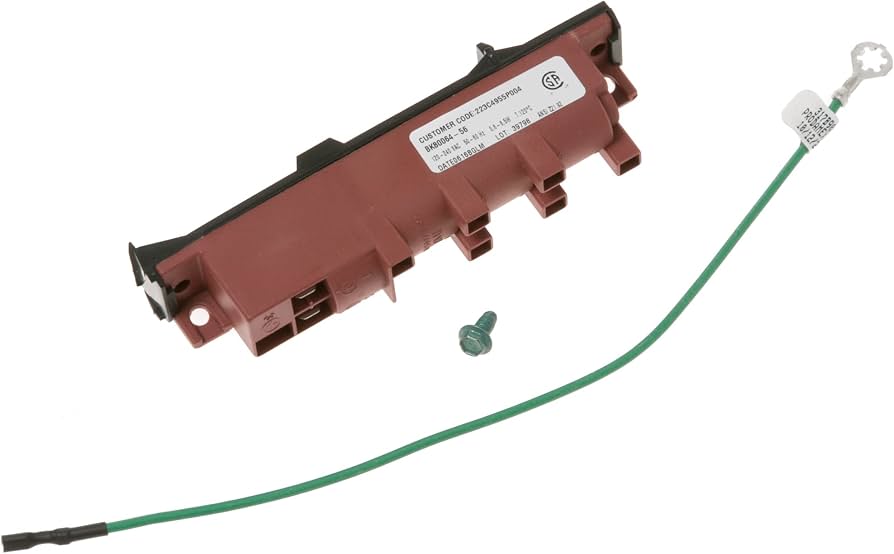
The spark module is the small box (usually under the cooktop or behind the control panel) that makes the rapid clicking spark. When it starts to fail, you may see:
- One burner will not ignite but others do, even after cleaning and cap alignment.
- Clicking that is weak, erratic, or different than usual.
- Multiple burners clicking but no ignition across the board (after you confirm the gas supply is on).
- Clicking that never stops, even with knobs off, after you have dried the switch area.
Before you buy parts
- Rule out moisture. Give it time to dry after cleaning.
- Swap parts between burners if your model allows it. On some stoves, burner caps and heads are interchangeable. If the problem follows the cap or head, you found your culprit.
- Inspect wiring if accessible: burned connectors or damaged wires can mimic a bad module.
Replacing a spark module
This is doable for a careful DIYer, but it involves access panels and wiring. If you are not comfortable taking photos and reconnecting wires one-for-one, call a pro.
- Unplug the range and shut off the gas valve.
- Access the module (commonly under the cooktop top panel or behind the backguard).
- Take clear photos of every wire connection and routing before removing anything.
- Watch for sharp sheet-metal edges as you open panels.
- Disconnect wires and remove the mounting screws.
- Install the exact replacement module (match model number, or cross-reference by the manufacturer parts list).
- Reconnect wires exactly as before, secure the module, reassemble panels.
- Turn gas back on, plug in, and test each burner.
Troubleshooting by symptom
| What you see | Most likely cause | What to try first |
|---|---|---|
| Clicks but no flame, and you may not notice a gas odor | Cap or head misaligned, clogged ports, gas supply issue | Reseat cap and head, clean burner ports, confirm gas valve is on |
| Clicks, you smell gas, still won’t light | Wet or dirty igniter, weak spark, spark not landing near gas | Clean and dry igniter, check spark location in dim light |
| One burner won’t light but others work | Dirty cap or head, bad igniter, local clog | Clean and swap caps or heads if possible, inspect igniter for cracks |
| All burners click but none light | Gas supply off, regulator issue, ignition system issue | Confirm gas valve is on and other gas appliances work, then inspect ignition components |
| Clicking won’t stop even when off | Wet or dirty switch harness, failing module | Dry behind knobs, avoid sprays, then consider module or switch replacement |
| Lights late with a whoosh | Mis-seated cap or head, partially clogged ports, weak spark | Turn it off and fix alignment and clogs before using again |
When to call a pro
- You smell gas and cannot quickly identify why.
- The burner lights but the flame is unusually large, lifting off the burner, or mostly yellow.
- You see damaged wiring, scorching, or melted connectors inside the range.
- You have to disassemble gas lines or the regulator to continue.
- You have repeated delayed ignition or flare-ups.
There is no shame in tapping out here. Gas appliances are safe when they are right, and unforgiving when they are not.
FAQ
Why does my gas stove click but not ignite after I cleaned it?
Moisture is the usual culprit. Water can short the spark to ground or create a conductive path where you do not want one. Unplug the range, remove caps and heads, dry everything thoroughly, and let it sit for an hour before trying again.
Can I still use the stove if one burner won’t ignite?
Yes, if other burners work normally and there is no gas smell. You can light the problem burner with a long-reach lighter temporarily, but treat that as a short-term workaround while you clean or repair it.
Do I need to replace the igniter or the spark module?
If only one burner is acting up, the igniter electrode or burner hardware on that burner is more likely. If multiple burners are acting weird, the clicking is erratic, or it never stops, the spark module or switch harness becomes more likely.
What if the burner lights sometimes, but not always?
Intermittent ignition usually points to a slightly dirty igniter, a cap that is not sitting perfectly flat, ports that are partially clogged, or moisture lingering after cleaning. Cleaning, thorough drying, and careful reassembly fixes most intermittent cases.